Get Full Government Meeting Transcripts, Videos, & Alerts Forever!
Get email alerts on the Trafficking Screening Informed Consent topic
No spam. Unsubscribe anytime.
Bill to restore parts of Nebraska’s informed‑consent law and add trafficking/coercion screening advances to committee discussion
Summary
LB 669 would remove court‑enjoined language from Nebraska’s informed‑consent statute and require private screening for coercion, domestic violence and human trafficking at abortion providers, including giving patients hotline information and an opportunity for a confidential call.
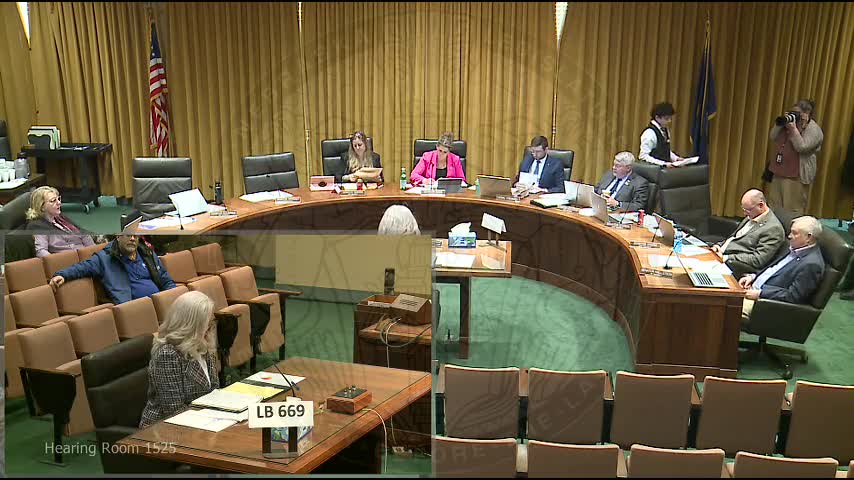
Senator Tanya Storer introduced LB 669 as a two‑part proposal: it would remove portions of an earlier informed‑consent statute that federal courts found unconstitutional and add a requirement that abortion providers screen patients privately for coercion, domestic violence and human trafficking and provide hotline resources and an opportunity for a confidential phone call.
Storer said the bill “removes language that was ruled unconstitutional” in past litigation and, separately, would require a private screening and confidential contact information be made available to patients so providers can identify victims of coercion or trafficking and offer help. She cited studies and survivor accounts presented in committee exhibits, including a 2014 Loyola University of Chicago study, to support the trafficking‑screening provisions.
Proponents included survivors, anti‑trafficking advocates and conservative policy groups who said screening offers a safety net for people who might otherwise be coerced into abortion by pimps or abusers. Marion Miner of the Nebraska Catholic Conference, Elizabeth Nunley of the Nebraska Family Alliance and others emphasized that LB 669 does not ban abortion but would secure an opportunity to intervene with victims of exploitation.
Opponents such as the Women’s Fund of Omaha, Planned Parenthood North Central States and the ACLU of Nebraska said screening for coercion is already part of clinical care in many settings and warned the bill rests on contested research and could stigmatize patients seeking care. Planned Parenthood cautioned the bill could insert state oversight into provider‑patient relationships and that available studies do not support the claim that a substantial share of abortions are coerced.
Neutral witnesses including the Nebraska Coalition to End Sexual and Domestic Violence said screening can save lives but urged careful drafting so private, trauma‑informed screening actually reaches survivors and does not create new barriers to care.
Senator Storer said the bill’s private‑screening language was designed to reduce the risk that an abuser would hear questions in clinic and she invited stakeholders to work on targeted amendments. The committee did not vote at the hearing.