Get Full Government Meeting Transcripts, Videos, & Alerts Forever!
Get email alerts on the Pregnancy Outcomes Immunity topic
No spam. Unsubscribe anytime.
Nebraska hearing on bill to provide criminal, civil immunity for pregnancy outcomes draws sharp debate
Summary
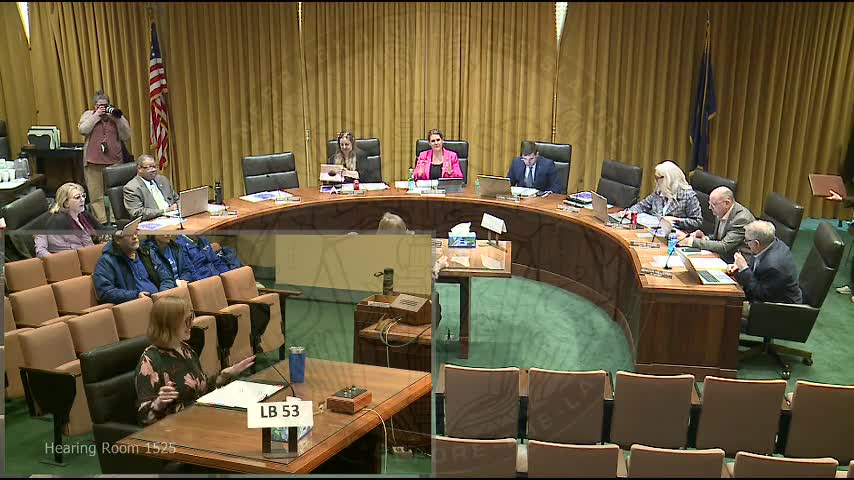
Sen. Machaela Cavanaugh introduced LB 53 to provide criminal and civil immunity for pregnancy outcomes that do not result in live birth, telling the Judiciary Committee the bill aims to ensure people seeking medical care for pregnancy complications are not investigated or prosecuted.
Senator Machaela Cavanaugh introduced LB 53 to the Judiciary Committee as a measure to provide criminal and civil immunity for a woman whose pregnancy “results in an outcome that does not result in a live birth,” including miscarriage and other non‑live birth outcomes.
Cavanaugh told the committee that the bill “is intended to assure people that they will not be in jeopardy if they seek medical care for complications relating to pregnancy” and cited national examples in which people were investigated or charged after pregnancy loss. She framed the bill as parallel to existing statutory language that says a woman shall not be subject to prosecution for an abortion under Nebraska law.
Proponents included representatives of the Women’s Fund of Omaha, the ACLU of Nebraska, Planned Parenthood North Central States, the National Advocates and other advocacy groups. Erin Feichtinger of the Women’s Fund said LB 53 will “cut through any confusion and fear that pregnant women in Nebraska may have about seeking abortion care or for what happens in their pregnancies.” Joy Kathurima of the ACLU and Adele Burke of Planned Parenthood urged the committee to advance the bill, saying some parts of the country have seen prosecutions tied to pregnancy outcomes and that immunity clarifies the legal status of people seeking care.
Opponents — including religious leaders, faith‑based advocacy groups and anti‑abortion organizations — argued against the bill on moral and legal grounds. Speakers such as Dr. Patrick Castle and David Zabilsky (Nebraskans Embracing Life) said the bill would remove consequences for what they described as the intentional termination of unborn life. Other opponents referenced religious and moral arguments and called instead for laws that would grant equal protection to the unborn.
Neutral and testimony from survivors and advocates also appeared. Senator Cavanaugh closed by saying the measure is not intended to change the ballot or abortion law outcomes but to ensure people seeking emergency or necessary maternal care are not investigated for miscarriage or pregnancy complications.
The committee heard a large number of live testimonies and received many written comments. No formal vote was taken; the record shows substantial public interest and sharply divided views across moral, legal and medical communities.