Get Full Government Meeting Transcripts, Videos, & Alerts Forever!
Get email alerts on the Caregivers Medicaid Estate Recovery topic
No spam. Unsubscribe anytime.
Nebraska bill would shield family caregivers from Medicaid estate recovery in some cases
Summary
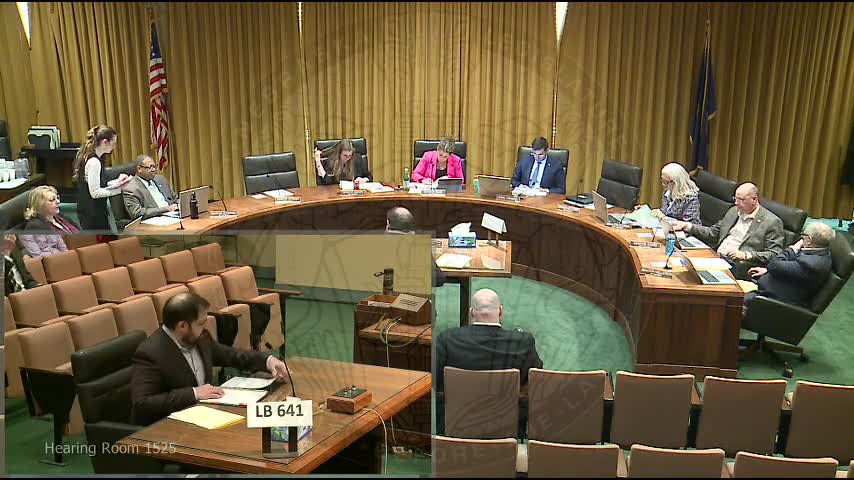
Sen. Eliot Bostar introduced LB 641 to carve out protections for relatives who move in to care for a loved one, allowing physician certification and adding assisted living to the list of institutional care for Medicaid estate recovery purposes. Proponents urged the committee to advance the bill; DHHS worked with the sponsor on an amendment.
Senator Eliot Bostar, representing District 29, urged the Judiciary Committee on behalf of LB 641 to “protect the financial interests of caregivers who share the residence of a family member in need of care” while preserving rules that prevent improper avoidance of medical expense recovery.
The measure would expand an exemption from Nebraska Medicaid estate recovery for relatives who live full time with a Medicaid recipient and who can document — including by a physician’s written attestation — that their caregiving delayed the recipient’s need for institutional care. The bill also adds assisted living facilities to the statutory list of facilities that, if entry is delayed because of caregiving, may trigger the exemption.
Bostar told the committee, “Caregivers often sacrifice their careers and financial futures by reducing work hours, taking on debt, and tapping into their own savings,” and described LB 641 as a way to lessen the risk that a house used by a caregiver could be treated as an estate asset subject to Medicaid recovery. He said the proposal requires a physician to certify that the caregiver’s actions forestalled institutional placement and authorizes the Department of Health and Human Services (DHHS) to adopt rules to implement the law.
AARP Nebraska’s Gina Ragland testified in support and stressed the importance of keeping older Nebraskans at home: “Family caregiving is a key component to making that wish a reality,” she said, citing national and state survey figures offered in the hearing. Alex DeGarmo of the Alzheimer’s Association told the panel LB 641 “assures individuals with Alzheimer’s and dementia can access the care they need, while reducing the burden on family caregivers.” Edison McDonnell of The Arc of Nebraska also supported the bill, saying it recognizes the contributions of families and can reduce pressure on institutional placements.
Committee questions focused on federal Medicaid compliance and the bill’s language. Senator Bob Hallstrom asked whether a deleted provision that would have said caregiving “may be reimbursed or unreimbursed” could be restored without violating federal rules; Bostar replied he would continue to work with DHHS to preserve helpful language while maintaining compliance.
No formal action or vote was taken at the hearing. Multiple proponents appeared in person; the sponsor said his office drafted an amendment with DHHS to address the department’s concerns.
For now the committee record shows interest from older-adult and disability advocates and technical work with DHHS to conform the proposal to federal Medicaid rules. If advanced, the bill would leave the department authority to promulgate rules and rely on physician attestation for a caregiving-based exemption from estate recovery.