Get Full Government Meeting Transcripts, Videos, & Alerts Forever!
Get email alerts on the Fetal Remains Disposition topic
No spam. Unsubscribe anytime.
Bill would require burial or cremation of remains from elective abortions, sponsor says
Summary
Senator Ben Hansen introduced LB632 to require licensed facilities that perform elective abortions to arrange burial or cremation of the remains. Proponents framed the measure as a public-health and dignity safeguard; opponents said the bill is vague, could impose burdens on providers and does not account for medication (at-home) abortions.
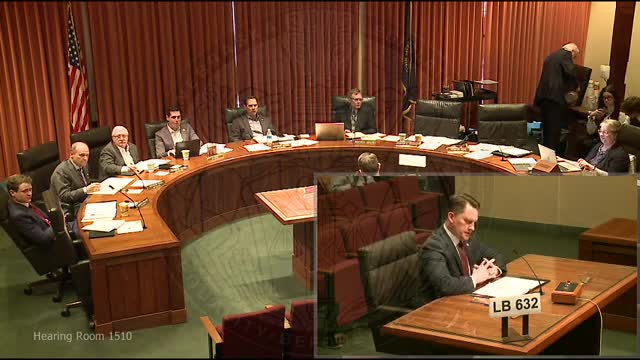
Senator Ben Hansen (Legislative District 16) told the Health and Human Services Committee LB632 would require health care facilities that perform elective abortions to arrange for burial or cremation of fetal remains. "LB632 provides a simple, inexpensive, preventative solution to this problem," Hansen said, citing national examples where remains were reportedly mishandled.
Proponents — including advocacy groups and several family members who described their own miscarriages — emphasized dignity and public-health concerns. Marilyn Klein described burying two miscarried infants and said the opportunity to memorialize them mattered to her family. "She was a person and she was important to our family," Klein said of her miscarried child.
Nate Grasz of Nebraska Family Alliance and Marion Miner of the Nebraska Catholic Conference argued the law would align abortion providers with hospitals’ existing disposal policies and prevent remains from being treated as medical waste. Grasz cited national cases of improper disposal and accused some providers and waste contractors of negligent practices.
Opponents, led by Planned Parenthood North Central States and the ACLU of Nebraska, said the bill is vague and legally problematic. Andi Curry Grub of Planned Parenthood argued the term "elective abortion" is not a medical standard and that most abortions in Nebraska are medication abortions taken at home; she warned the bill fails to address how to handle home medication abortions and said mandating burial or cremation amounts to a one-size-fits-all requirement that could force religious practices on patients. "Decisions about abortion should be left to patients, their families, and their healthcare providers," Curry Grub told the committee.
The ACLU’s Spike Eickhold added that the bill lacks definitions and could have unintended regulatory impacts on clinics and prescribing practices. He urged the committee not to advance the bill without clearer definitions addressing medication abortion and facility scope.
Ending: The sponsor noted the bill only imposes duties on health care facilities that perform elective abortions and said it does not require parents to take any action; he also said hospitals already follow disposition policies for other fetal deaths. The committee did not record a vote in the hearing transcript. Senators asked for clarifications and signaled willingness to refine definitions in follow-up work with opponents on narrow language.