Get Full Government Meeting Transcripts, Videos, & Alerts Forever!
Get email alerts on the Pdmp Hie Funding Sync Health topic
No spam. Unsubscribe anytime.
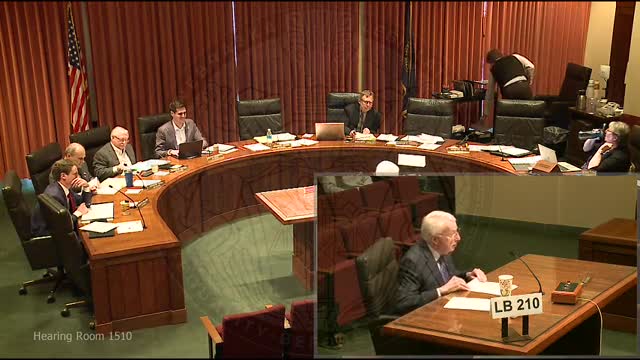
Lawmakers hear debate over funding model for Sync Health PDMP and health information exchange
Summary
Senator Merv Riepe told the committee LB210 would create a statutory funding mechanism for Sync Health — Nebraska’s health information exchange operator — and the state PDMP, shifting some program costs from general fund support to an assessment model tied to PBMs and user fees.
Senator Merv Riepe (District 12) told the Health and Human Services Committee LB210 would refine Nebraska’s prescription drug monitoring program (PDMP) and health information exchange (HIE) rules and create a funding model that uses assessments and fees on pharmacy benefit managers (PBMs) and managed care plans to replace general fund appropriations. "This bill makes targeted updates to ensure the system remains efficient, transparent, and accessible while maintaining necessary oversight," Riepe said.
Sync Health chief executive Jamie Bland and other proponents argued the HIE and PDMP provide critical, point-of-care information and that current federal/state match funding is unsustainable without a statutory funding vehicle. Bland told the committee that queries to the HIE exceed 750,000 unique queries per month and the PDMP exceeds 200,000 queries per month; she said LB210 would authorize assessments and allow Sync Health to charge user access fees while working through the federal APD (advanced planning document) process with CMS.
Physicians, pharmacists, veterinarians, insurers and hospital representatives raised concerns. Jeremy Campbell, a physician assistant testifying for the Nebraska Academy of Physician Assistants and the Nebraska Medical Association, opposed fees that could be charged to individual prescribers or dispensers, saying the PDMP was created as a free public-health tool and that fees could reduce provider participation. "By introducing the possibility of access fees with no cap, LB210 could create a financial disincentive for providers to utilize the PDMP," Campbell said.
The Nebraska Pharmacists Association and several rural providers warned that independent and rural pharmacies could face disproportionate burdens because many cannot pass fees onto patients. The Nebraska Insurance Federation cautioned that any PBM assessment would likely be passed to health plans and then to consumers; the industry representative also flagged due-process concerns if licensure or condition-of-doing-business provisions are used as enforcement.
Hospital representatives testified neutrally, seeking additional specifics: participation rules, timelines, upfront costs, how hospitals would be reimbursed for assessments, and assurance that the PDMP access would remain free for providers. Sync Health and the bill sponsor said they are pursuing an APD with CMS and working with stakeholders to refine user-fee proposals and safeguards; they proposed memoranda of understanding with hospital associations to clarify responsibilities outside the statute.
Ending: The transcript records extensive stakeholder engagement and no committee vote during the hearing. Multiple organizations requested additional guardrails, clearer fee caps and greater stakeholder representation in governance before the committee advances the bill.