Get Full Government Meeting Transcripts, Videos, & Alerts Forever!
Get email alerts on the Occupational Therapy Scope topic
No spam. Unsubscribe anytime.
Committee considers modernizing occupational therapy scope to include dry needling and updated modalities
Summary
LB630 would update Nebraska’s occupational therapy scope to reflect current education and practice, clarify use of dry needling and physical agent modalities, and allow certified assistants to use specified modalities under defined conditions, proponents told the committee.
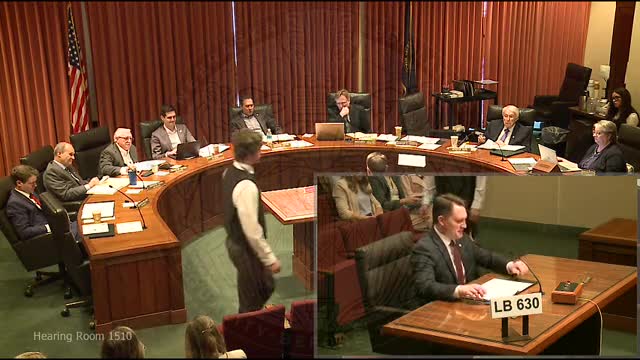
Senator Ben Hansen (Legislative District 16) presented LB630 to the Health and Human Services Committee as a scope-of-practice update reflecting credentialing review recommendations and new entry-level educational standards for occupational therapists. "LB630 was brought to me by the Nebraska Occupational Therapy Association… the scope changes in the bill reflect the most current evidence based occupational therapy service provisions," Hansen said.
Occupational therapists and educators testified that the bill updates statutory language to match the American Occupational Therapy Association’s current model and to clarify when advanced modalities such as dry needling and physical agent modalities may be used and by whom. Melissa Kimmerling, lead of the task force that completed the credentialing review, told the committee the proposal had unanimous approval from the Technical Review Committee and that changes were made after stakeholder outreach. "This bill presents updated language that reflects the current language of the profession," Kimmerling said.
Proponents said the changes are intended to increase access to care, especially in rural areas where practitioners may be the sole provider, and to reduce administrative barriers that limit reimbursement for accepted modalities. Erin Westover, president of the Nebraska Occupational Therapy Association, said the profession’s entry-level education has shifted from a bachelor’s to master’s or doctorate and that the updated language aligns statute with modern curricula and clinical practice. "LB630 better describes pathways required for application of these advanced practice skills, such as dry needling," Westover said.
Committee members asked about the credentialing review timeline and stakeholder engagement. Testifiers said the 407 process took under a year from committee assignment, included multiple meetings, and produced language adjusted in response to comments from physical therapists, chiropractors and physician groups. No opponents were recorded in the hearing; a small number of written opponents appeared in the online record.
Ending: Senator Hansen said he might offer a minor cleanup amendment to remove duplicative language. The committee did not record a final vote in the hearing transcript; proponents asked the committee to advance the bill after review by the Board of Health and the Attorney General.