Get Full Government Meeting Transcripts, Videos, & Alerts Forever!
Get email alerts on the Newborn Safe Haven Baby Boxes topic
No spam. Unsubscribe anytime.
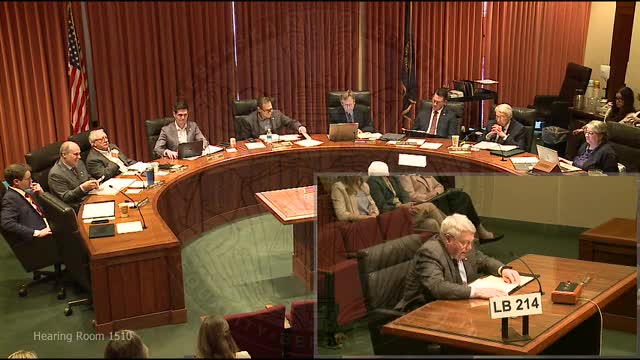
Committee hears bill to authorize ‘baby boxes’ as safe-haven drop-off locations
Summary
Senator Rick Holdcroft told the Health and Human Services Committee LB214 would allow newborn safety devices — known as baby boxes — at qualifying locations as an additional anonymous option for parents to surrender infants without criminal prosecution.
Senator Rick Holdcroft (Legislative District 36) told the Health and Human Services Committee that LB214 would add newborn safety devices — commonly called baby boxes — to the list of authorized drop-off locations under Nebraska’s Newborn Safe Haven Act, providing an additional option for parents to surrender newborns without fear of criminal prosecution. "This bill would amend Nebraska's Newborn Safe Haven Act to add newborn safety devices, affectionately referred to as baby boxes, to the list of authorized drop off locations under the Newborn Safe Haven Act," Holdcroft said in his opening.
Proponents said the devices provide anonymity that some parents seek and, they argued, can prevent dangerous abandonments. Jessie Gitros, executive assistant to Monica Kelsey of Safe Haven Baby Boxes, said national data collected by her organization show continued unsafe disposals and strong demand for anonymous surrender. "A baby is thrown away like trash every 3 to 4 days in America on average," Gitros told the committee, and the group noted there are about 320 active baby boxes in the U.S.
Supporters described how boxes are intended to be installed only at 24/7-staffed locations — typically hospitals or fire stations — and connected to alarms and temperature control. Gitros and other proponents said boxes are tested regularly, that manufacturers are pursuing Underwriters Laboratories (UL) certification, and that locations receive training and a 24/7 support line. The committee heard a staff estimate of an approximate per-unit cost of about $15,000, which proponents said covers the box, signs, legal fees, insurance, ongoing support and supplies.
Several community and faith-based groups, including Nebraska Family Alliance and Nebraska Right to Life, urged passage. Nate Graz of Nebraska Family Alliance said the devices have saved lives in other states and argued LB214 would create another safety option for parents in crisis. "If this bill can save 1 life here, it's worth it," Graz said.
Opponents and some committee members urged caution. Senator Steve Reedy and others asked about maintenance, staffing and whether rural volunteer stations would qualify; sponsors clarified the bill limits eligible locations to facilities staffed 24/7 (so many volunteer-only stations would not qualify) and that installation is voluntary, generally dependent on local fundraising and nonprofit support. Scott Thomas, testifying in opposition, raised concerns about paternal rights and the broader implications for child welfare systems.
Proponents noted legal protections already exist under Nebraska’s Safe Haven law that prevent prosecution for parents who safely surrender infants at approved locations; they said LB214 extends that protection to devices installed at qualifying locations. Proponents also described weekly testing protocols and local training for staff who would monitor equipment and respond to alarms.
The committee record included dozens of written proponents and a handful of written opponents. The transcript shows extensive Q&A but does not record a committee vote on LB214 during this hearing.
Ending: The committee heard invited witnesses, hospital and fire representatives, and advocates; senators asked detailed questions about cost, siting, alarm systems, staffing and legal protections. The bill sponsor said funding for installation would rely on local fundraising and nonprofit partners and that the state fiscal note would cover limited installation assistance and an awareness campaign by the Department of Health and Human Services if the Legislature approves funding.