Get Full Government Meeting Transcripts, Videos, & Alerts Forever!
Get email alerts on the Charter Funding topic
No spam. Unsubscribe anytime.
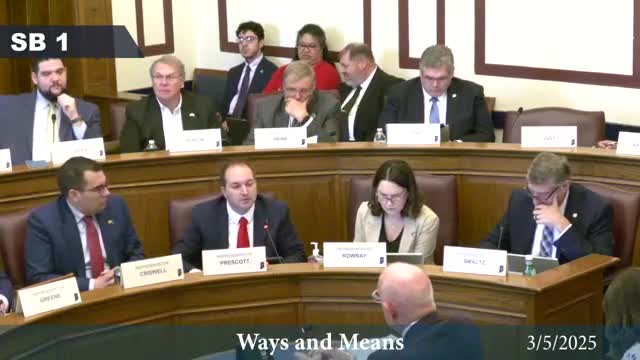
Debate over Senate Bill 5 18: should local property taxes follow public-school students to charter schools?
Summary
The House committee heard hours of testimony Jan. 28 on SB 5 18, a bill to require phased sharing of local property-tax dollars with public charter schools so tax dollars "follow" the student.
Lede
The House Ways and Means Committee took public testimony Jan. 28 on Senate Bill 5 18, a measure to require some local property-tax revenue be shared with public charter schools so that public funds “follow” the student regardless of which public school (charter or district) the student attends.
Nut Graf
Supporters said the bill closes an unfair funding gap, noting many charter students are poor and receive less local revenue than neighbors in traditional public schools. Opponents — superintendents, school boards, teachers’ unions and many parents — warned the design would sharply cut funds available to school districts and imperil transportation, special education and building upkeep without clear, guaranteed replacement funding.
Body
What the bill would do: SB 5 18 phases in a mechanism to apportion some operating and (new) capital levy proceeds proportionally to the public school that actually educates a pupil. The measure phases implementation over several years and includes grandfathering language for existing debt service. The legislation excludes existing capital debt (grandfathered) but creates sharing rules for newly issued capital levies and provides a phase-in window for operational sharing.
Supporters’ case: Charter operators, school leaders from some charter networks and parents at hearings said many families — particularly Black, Latino and low-income households — choose charter options and deserve the same local-tax support other public students receive. “Choice without fair funding is an empty promise,” said Lindsay Amler of Education 1 at University; other witnesses said charter students were, on average, notable achievers in state studies and needed parity rather than patchwork grants.
Opponents’ case: Superintendents and school board members — including Indianapolis Public Schools leaders — repeatedly warned the bill, as drafted, risks cutting district operations and forcing school closures. "The loss of funding could force us to close 10–20 school buildings and eliminate transportation routes for thousands of students," Indianapolis superintendent Alicia Johnson told the committee. Local officials also argued the bill does not require charter operators to provide the same back-office services (transportation, building maintenance, special-education administration) that many districts now provide to innovation-network schools.
Financial and operational concerns: Witnesses also focused on logistics and fiscal mechanics. Several school finance officers and the Department of Local Government and Finance told the committee that debt-service levies and voter-approved referenda have unique legal and timing constraints, so sharing those dollars is legally and practically complex. Multiple witnesses urged careful modeling and transparency: if states or districts intended to share capital or operational dollars, the change must not threaten existing debt or service commitments.
Public testimony snapshots
- Parents and students gave personal accounts of how a specific school helped a child learn to read, obtain internships or prepare for college; some parents said the local charter was the only practical option for their family. - Mayors, county commissioners, township trustees and rural school leaders warned of service cuts to fire, EMS, sanitation and roads if local levies were reduced. Township officials emphasized they already use every local tool available in many counties and lack additional capacity to replace lost property-tax revenue. - Teachers and union representatives described the destabilizing effect on staff morale and recruitment if districts lose revenue and must cut positions.
Why it matters
Indiana law already provides a per-student charter grant and several state facility grants; proponents contend SB 5 18 corrects a remaining local-taxes disparity while opponents say the grant structure and local aid already provide support. The bill sits at the intersection of property-tax policy, education finance and the state’s long-running debates over school choice and local control.
Ending
Committee members did not vote on the measure during the hearing. Several members asked for further fiscal modeling and for written proposals to clarify how new capital sharing, grandfathering and debt-service protections would function in practice. Supporters urged swift action to deliver funding parity; opponents urged a pause to craft guarantees that no district will face unmanageable cuts to transportation, special education or building maintenance.
Speakers quoted: Senator Rogers; Dr. Alicia Johnson (Indianapolis Public Schools); Jason Johnson (governor’s office); Lindsey Amler (Education 1 at University); Scott Schmaul (Lake County finance)