Get Full Government Meeting Transcripts, Videos, & Alerts Forever!
Get email alerts on the School Safety Nonpublic topic
No spam. Unsubscribe anytime.
Bill would let accredited nonpublic schools form police departments and expand some grant access; zoning change sparks opposition
Summary
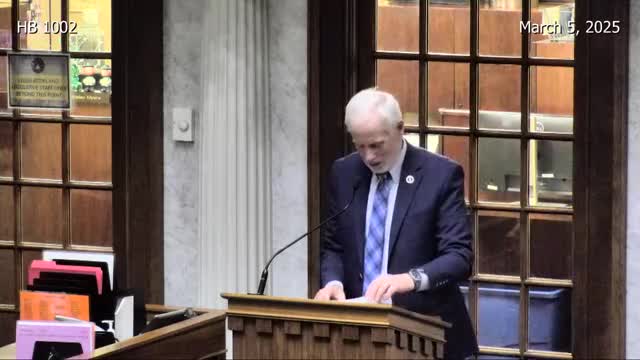
Representative Bob Behning told the Senate Education and Career Development Committee that House Bill 1515 would allow accredited nonpublic schools to form school police departments, access certain teacher recruitment funds and add other technical changes affecting virtual charters and choice scholarships.
Representative Bob Behning told the Senate Education and Career Development Committee that House Bill 1515 is a smaller, targeted package aimed at expanding options for nonpublic schools while aligning certain rules with public and charter schools.
The bill would allow accredited nonpublic schools to create school police departments, enable participation in the STEM teacher recruitment grant (subject to funding in the budget), add an appeal process for families denied choice scholarship eligibility because of data errors, and change virtual charter attendance withdrawal thresholds.
Why it matters: Supporters said the measures provide parity between nonpublic and public schools on safety, recruitment and leadership training. Opponents focused on the bill’s zoning language, arguing it limits local control over land‑use decisions.
Key provisions and testimony: - School police departments: The bill would permit accredited nonpublic schools to establish sworn school police departments where they have the capacity and choose to do so. Dr. Brian Doherty, head of Heritage Christian School in northeast Indianapolis, described his school’s situation: "Our officers are unable to access essential training at the Indiana Law Enforcement Academy because we do not have our own police department," and said the school employs a five‑member security team and would fund training and personnel to form a department.
- Grants and programs: The bill would open the STEM teacher recruitment grant to nonpublic schools; the sponsor noted the fund was not funded in the House budget at the time of the hearing but could be in future appropriations. The bill would also allow nonpublic principals to participate in the Indiana Principal Leadership Institute, if seats and funding are available.
- Choice scholarship appeals and virtual charters: The bill creates an appeal path when a student is deemed ineligible for a choice scholarship because of a data error, mirroring language in other bills. It would change the virtual charter withdrawal rule from "10 days throughout the year" to withdrawal after 10 consecutive days or 18 cumulative unexcused absences.
- Zoning and local control: The bill contains language intended to prevent zoning from being used solely to block the opening of a charter school; that provision drew opposition from local advocates and unions. Sally Sloan of AFT Indiana said deleting local zoning authority "infringes on their authority to determine what is best for their communities."
Committee reaction: Supporters included the Indiana Nonpublic Education Association, the Archdiocese of Indianapolis and representatives from nonpublic schools; they argued the bill creates parity for safety and access to programs. Municipal and labor witnesses warned the zoning language could constrain local land‑use decisions and asked for retention of local authority.
No formal vote was recorded at the hearing; committee members asked follow‑up questions about how new police departments would be authorized and whether state funds would support them. Behning said no state funding to operate local police departments was proposed and that individual schools expected to cover costs.
Ending: The committee heard testimony and questions; sponsors and opponents indicated willingness to keep engaging on zoning and operational details as the bill moves forward.