Get Full Government Meeting Transcripts, Videos, & Alerts Forever!
Get email alerts on the Education Code Cleanup topic
No spam. Unsubscribe anytime.
Committee hears bill to repeal duplicative school laws, shift most trainings to local control
Summary
A Senate committee heard House Bill 1002, a wide-ranging Title 20 cleanup that would repeal unfunded provisions, strip many "may" clauses, move non‑federally mandated trainings to local districts and remove specific statutory qualifications for the state education secretary.
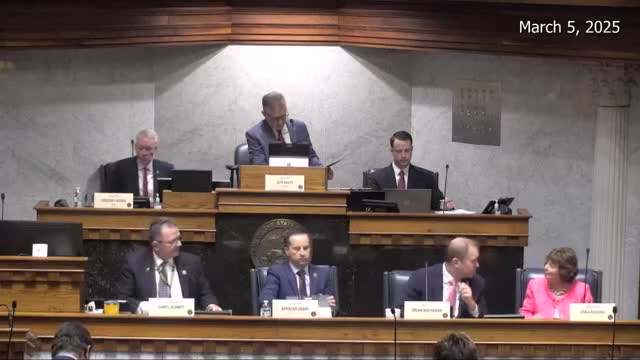
At a hearing of the Senate Education and Career Development Committee, Representative Bob Behning introduced House Bill 1002, a multi‑section revision that would repeal duplicative and unfunded provisions in Indiana Code Title 20 and shift many statewide training decisions to local school leaders.
The bill’s sponsor, Representative Bob Behning, said the measure removes duplicative language and "may" provisions from the code and narrows the statute to items the General Assembly deems necessary for accountability. "If you may do it, I don't need to tell you that you may do it," Behning told the committee, arguing the change would give local districts more flexibility while preserving accountability where required.
Why it matters: Advocates for school leaders and some district groups told the committee the bill would free staff time and let districts tailor training to local needs. Opponents, including union representatives, said removing specific statutory requirements for the education secretary and certain charter oversight language reduces transparency and could lower public confidence in statewide oversight.
Major provisions and debate: - Repeal and cleanup: Behning said the bill removes unfunded funds and duplicates within Title 20 and eliminates numerous "may" directives that he and other lawmakers view as unnecessary. He estimated the bill removes roughly "35,000 words in the Indiana code." The bill focuses only on Title 20 and does not change cross‑references outside that title.
- Training and local control: The bill moves training requirements that are not federally mandated from state statute to local determination, while keeping the Department of Education responsible for maintaining an electronic portal for optional trainings. Cindy Long of the Indiana Association of School Principals said the change would let districts "provide guidance on timing and frequency" and could give educators more time for student work.
- Secretary qualifications and residency: The bill would delete statutory qualifications that had required an advanced degree, teaching/superintendent experience and a two‑year Indiana residency prior to appointment. Opponents, including Sally Sloan of AFT Indiana, said that provision "repeals qualifications for the secretary of ed" and warned that removing residency and credential requirements reduces a baseline of professional assurance.
- Charter‑related cleanup: The bill removes duplicative charter language in Title 20. Behning said many charter provisions are already subject to federal reporting or appear elsewhere in state code; Lisa Tansel of the Indiana School Boards Association said some repeals remove antiquated or unnecessary statutory text and do not eliminate accountability requirements.
What the committee heard: Testimony came from educator organizations and school boards. The Indiana Association of School Principals and the Indiana School Boards Association supported many cleanup changes as time savings for local staff, while AFT Indiana said the package went too far in removing qualifications for statewide office and in language that could be read to reduce some charter reporting.
Next steps: The committee heard the bill and allowed public testimony; no formal vote was recorded during the hearing.
Ending: Representative Behning said he envisions the measure as the first step in a multiyear code reduction effort and asked members to consider further cleanup in future sessions.