Get Full Government Meeting Transcripts, Videos, & Alerts Forever!
Get email alerts on the Carbon Sequestration topic
No spam. Unsubscribe anytime.
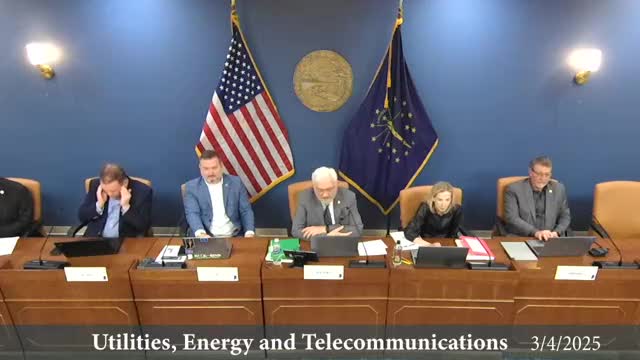
Committee hears carbon‑sequestration cleanup bill; vote deferred pending amendment on funding and permitting
Summary
Senate Bill 457, a cleanup and permitting bill tied to carbon sequestration and CO2 pipelines, drew extended testimony on safety, property rights and whether the Department of Natural Resources should take primacy over Class VI injection‑well permitting.
Senate Bill 457 (referred to in the hearing as a carbon‑sequestration cleanup and permitting bill) received extended testimony but no final vote; the sponsor and committee agreed to hold the measure for an amended vote next week so funding and clarity issues can be resolved.
Sponsor remarks and scope: Sponsor Senator Glick (introduced by Chairman Soliday on behalf of the absent senator) and Rep. Soliday described the bill as a cleanup of prior carbon sequestration statutes, focusing on administrative and financial responsibilities rather than revisiting the policy decision to allow sequestration. Rep. Soliday said the central question for the bill and its amendment is whether post‑closure costs should fall to taxpayers or the sequestration companies; the sponsor and amendment text aim to keep financial responsibility with the companies and create a trust fund to protect the state when long‑term stewardship is required.
DNR testimony and requested amendment: Maddie Comer, chief of staff for the Indiana Department of Natural Resources (DNR), told the committee DNR is pursuing primacy for Class VI injection well permitting from the EPA and requested an amendment to reestablish an administrative fund and a funding mechanism. Comer said DNR estimated it could operate the program for an estimated $1,000,000 cap on the administrative fund and proposed excess collections revert to the general fund. Comer said primacy planning is in early stages and DNR will provide more detailed cost and procedural materials as they develop the program.
Supporters and industry testimony: Mark Schublak (CountryMark) testified the bill “refines and perfects Indiana's existing CO2 law” and that the intent is to provide a clear regulatory and legal framework to allow projects to move forward with safety assurances. Heidelberg Materials’ Wendy Krause described a planned Mitchell cement plant carbon‑capture project intended to capture and store up to 2,000,000 metric tons of CO2 a year and testified about anticipated economic and job impacts of that private project. The American Petroleum Institute (Maureen Ferguson) said the bill clarifies relations between regulators and industry and strengthens enforcement provisions.
Public concerns and opposing testimony: Several speakers raised safety, property‑rights and local‑control concerns. Frances Spooner (real‑estate broker, farmer’s daughter) cited BP Energy material and said an injected CO2 plume can expand underground and in some sites may extend miles from a well; she urged caution and protection of local landowner rights. Citizens Action Coalition (Kerwin Olson) said CAC was neutral in the Senate but expressed concerns that DNR’s decision to seek primacy for Class VI permitting should have been discussed with the legislature and public before moving forward. Yvonne Cook and other community members urged rigorous safety review; some speakers cited recent draft PHMSA rules and actions in other states, including Illinois’ temporary pause, as reasons to proceed carefully.
Key technical and statutory questions raised during the hearing included whether a ‘‘permit’’ in statute refers to the permit‑to‑construct or the permit‑to‑inject (DNR said it would confirm), whether pipelines crossing private property without a public right‑of‑way require a certificate (the amendment clarified that a certificate is not required only where the pipeline is entirely on the surface property of the storage facility or crosses only parcels with existing private easements/right‑of‑way), and what timing and appeal rights apply to an integration order tied to a permit.
Fiscal and procedural points: DNR seeks a reestablished administrative fund capped at $1,000,000 with excess reverting to the general fund to pay for permitting primacy and program operation; Rep. Pierce and others urged that fee revenue be dedicated to ensure the agency has resources rather than being swept and that the amendment be explicit about fees and spending. Citizens Action Coalition urged clearer statutory language about whether a statutory ‘‘may’’ should be a ‘‘shall’’ when an exemption applies.
Committee action: The sponsor declined to take a final vote at the hearing because the amendment would require recommitment to Ways & Means; the committee agreed to an amended vote next week with additional drafting to resolve the funding mechanism, private‑property clarifications and timing language for permits and integration orders.
Next steps: Committee staff and stakeholders will draft technical clarifications; the bill remains pending and will be re‑considered at an amended‑vote meeting the following week.