Get Full Government Meeting Transcripts, Videos, & Alerts Forever!
Get email alerts on the Cultivated Meat Labeling topic
No spam. Unsubscribe anytime.
Committee advances bill requiring cultivated meat products leaving processors be labeled as imitation
Summary
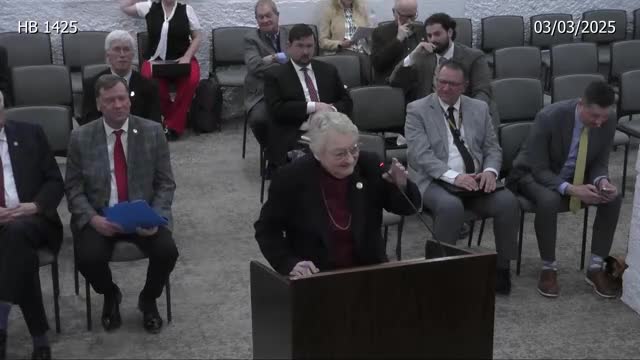
The Senate Agriculture Committee advanced House Bill 14 25, 8-1, to require processors to label cultivated (cell‑derived) meat leaving facilities as an "imitation meat product," after a committee debate over terminology and federal preemption risks.
The Senate Agriculture Committee advanced House Bill 14 25 by a vote of 8-1 after a wide-ranging discussion about how to label cell-cultivated meat products and which state agency should oversee them.
Senator Glick, presenting the measure, said the bill would "clearly label lab grown meat on the labels of products that are put in the grocery store in circulation for sale to the public" and defines “cultivated meat product” as animal protein grown from extracted animal cells in a facility. The bill places administration with the Board of Animal Health and requires packaging leaving processors to include the phrase "this is an imitation meat product." Senator Glick and Representative Culp emphasized the measure aims to protect consumers from being misled.
Board of Animal Health counsel Sarah Simpson said the board supported language that kept the product within the statutory definition of a meat product so the state can exercise inspection, detention and condemnation authorities consistent with federal inspection law. "The whole section that talks about the release of criminal background check information... we wanted to make sure that everywhere in the... law that it made sure that it said registered or permitted," she said of unrelated agency technical clarifications, and she later told committee members the board wants consistency with USDA FSIS oversight for inspection authority.
Jeremy Elts of the Good Food Institute testified in opposition and urged caution. "Labeling cultivated meat as imitation meat is simply inaccurate," Elts told the committee, saying USDA‑approved labels read "cell‑cultivated chicken" and that state‑specific labeling risks federal preemption, First Amendment and interstate commerce challenges. He said the industry is nascent — two companies had USDA steps approved — and inconsistent state labeling could discourage companies from selling in Indiana.
Representative Baird, the bill's author in the House, told the committee he would prefer stronger language and said he would have favored a ban; he described the production process as generating a cellular slurry that is later combined with plant fibers to imitate meat and said the state should protect consumers and farmers.
Committee members debated the wording. Several senators suggested alternatives such as "fake" or adding "cell‑cultivated" to the label; others cautioned that terms must be consistent with federal labeling and not interfere with inspection authority. Senator Yoder explained she would vote no to allow more work on language; the final roll call recorded one no (Yoder) and eight ayes, and the committee sent the bill forward with that margin.
The committee chair encouraged staff and sponsors to reconcile labeling terms with the companion retail‑labeling measure and to confirm federal labeling requirements before further action.