Get Full Government Meeting Transcripts, Videos, & Alerts Forever!
Get email alerts on the Housing topic
No spam. Unsubscribe anytime.
Administration says Affordable Homes Act and other tools are boosting housing production but lawmakers press for more homeownership focus
Summary
Governor Healey’s administration defended its FY 2026 housing investments — citing increased unit approvals and programs such as HDIP and volume cap allocations — while lawmakers urged clearer targets and larger commitments for affordable homeownership to reduce racial ownership gaps in cities such as Boston.
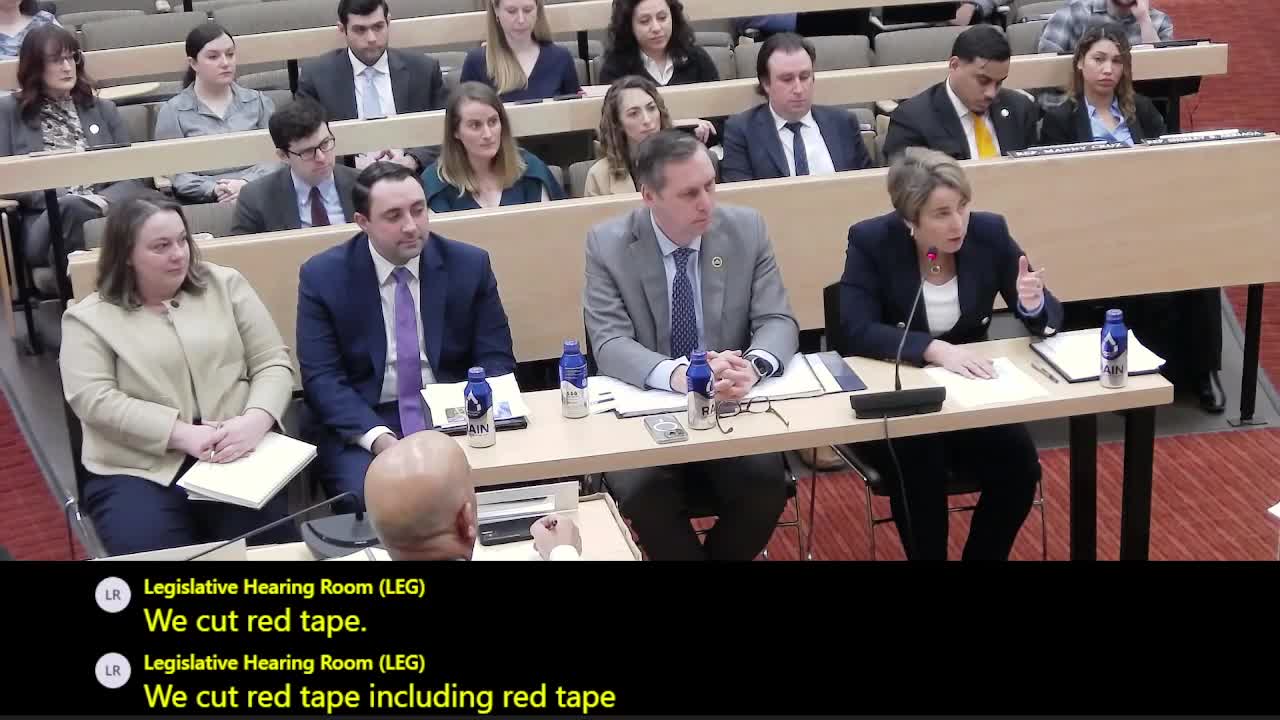
Housing and homeownership took up sustained questioning at the first FY 2026 Ways and Means hearing on March 5 as members pressed the administration to show how House 1 and other actions will help get homes built and support ownership for historically displaced communities.
Secretary of Housing officials (and the governor in her remarks) cited the Affordable Homes Act — a multi‑billion dollar bond and enabling package — and recent administration initiatives as major steps to increase housing supply. The administration told legislators that statewide housing production approvals increased from roughly 8,000 funded units in 2003 to nearly 12,000 in 2024, and highlighted HDIP and mass housing financing activity for gateway cities and other projects.
Senator Liz Miranda and Representative Chynah Tyler (among others) pressed the administration to prioritize homeownership and address racial homeownership gaps in Boston and other cities. The administration said it has directed volumes of state tax‑exempt bond authorizations and used volume cap allocations and other tools to support homeownership activity — noting that the Massachusetts Housing Partnership deployed roughly $784 million to help about 2,400 homeowners in a recent year — but acknowledged that rental development has been the dominant use of many funding streams.
The administration also pointed to permit streamlining, inventory of state land and targeted public‑housing investments as levers to accelerate supply. Officials described a recently completed statewide housing “thermometer” or plan showing roughly 220,000 units needed over 10 years and cited recommendations from the Commission on Unlocking Housing for implementation steps.
Why it matters: Housing supply and ownership affect affordability, tax bases and long‑term wealth building. Lawmakers representing gateway cities and Boston said current funding plans still skew toward rental and new construction, and asked for stronger, dedicated homeownership financing targets and a clearer breakdown of how bond authorizations will be used.
What happened next: The administration agreed to continue working with legislators on volume cap allocations, public‑housing inventories and other program design and to provide more detail to the committee about how Affordable Homes Act authorizations will be deployed. Lawmakers said they would track whether allocations include a meaningful homeownership share and urged using state land, regulatory changes and HUD/municipal alignment to speed conversions and rehab projects.
Ending: The FY 2026 budget hearing did not include a final policy decision on homeownership targets; committee members asked the administration to provide more specific, regionalized allocation plans and to analyze whether current bond authorization plans allocate adequate funding to homeownership.