Get Full Government Meeting Transcripts, Videos, & Alerts Forever!
Get email alerts on the Advanced Transmission Technologies topic
No spam. Unsubscribe anytime.
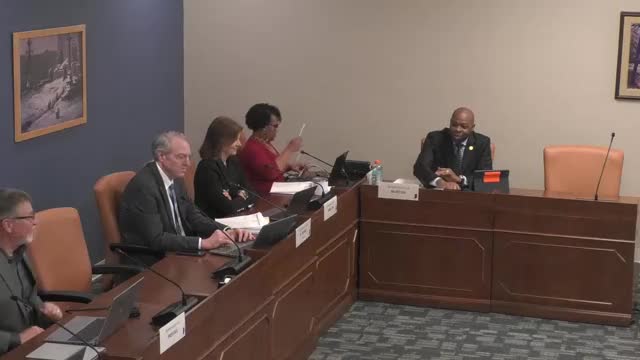
Committee advances bill requiring utilities to study ‘advanced transmission technologies’ in planning
Summary
Senate Bill 422 advanced after testimony that advanced transmission technologies can increase capacity on existing power lines and reduce the need for new transmission construction.
Senate Bill 422, introduced by Sen. Mike Cook, advanced from the House Utilities, Energy and Telecommunications Committee after testimony from utilities, conservation groups and technical experts who said so-called advanced transmission technologies (ATTs) can increase capacity on existing lines and reduce the need to build new transmission.
The bill would require utilities to include ATT assessments in their integrated resource plans (IRPs), direct the Indiana Utility Regulatory Commission (IURC) to study ATT applications and encourage ATT deployment under IURC oversight. Committee members voted to advance the bill; the committee recorded a 12-0 affirmative vote on the motion to report the bill.
Why it matters: Supporters told the committee ATTs — hardware and software changes such as advanced conductors and real‑time line sensors — can free capacity on existing lines, cut congestion costs and be deployed far faster than new transmission lines. Advocates argued the technologies help integrate renewables and reduce land use impacts associated with new right‑of‑way construction.
Carter Harms of Pew Charitable Trusts, who presented an introductory overview, said, “What advanced transmission technologies are is, hardware and software solutions that cost effectively increase the capacity and resilience of the existing transmission grid.” He told the committee states are already adopting related laws and that nationwide deployment could, Pew estimates, unlock substantial generation capacity and save consumers on transmission and distribution costs.
Jeff Cummins of AES Indiana described the utility’s pilot of dynamic line rating sensors. “For our pilot … we installed 42 sensors on 5 transmission lines in Indiana and Ohio,” he said, adding the devices took roughly 30 minutes each to install and that the deployment required no outages. Cummins said the pilot produced a limited dataset under generally favorable weather conditions but demonstrated operational benefits the utility will continue to evaluate.
Other supporters included Audubon Great Lakes (Adam Ford), the Hoosier Environmental Council (Sam Carpenter), Indiana Conservation Voters (Delaney Barber Quan), Indiana Electric Cooperatives (Ryan Hadley), AARP Indiana (Jason Tomsey), Indiana Energy Association (Matt Long) and several advocacy groups. Testimony highlighted three recurring points: (1) ATTs can increase line capacity by sensing and using real‑time conditions, (2) they can be deployed faster than new lines and (3) aligning utility incentives and planning requirements helps move pilots to actual deployment.
Committee action: A motion to report the bill out of committee passed on a roll call that recorded the following affirmative votes: Chairman Saliday (aye); Rep. Dave Hall (yes); Rep. Culp (aye); Rep. Jim Pressell (aye); Rep. Chris Jeter (yes); Rep. Bob Morris (yes); Rep. Schonk Wyler (aye); Rep. Tim Westco (yes); Rep. Matt Pierce (yes); Rep. Carrie Hamilton (yes); Rep. Alex Burton (aye); Rep. Pryor (aye). Rep. Dale Devon was excused. The committee reported the bill with a 12-0 vote.
What the bill does not do: The measure sets planning and study requirements; it does not mandate specific construction or a funding mechanism, nor does it require immediate rate recovery for any particular ATT deployment. Supporters and utility representatives emphasized the bill is intended to make the technologies a routine part of planning rather than a regulatory mandate to build new infrastructure.
Next steps: The bill was advanced out of committee for further consideration. The committee heard technical and stakeholder testimony and indicated receptive interest in clarifying IRP language and incentive alignment in later drafts.