Get Full Government Meeting Transcripts, Videos, & Alerts Forever!
Get email alerts on the Healthcare And Education topic
No spam. Unsubscribe anytime.
Senate approves emergency CON process for bankrupt hospital transfers, veterans tax fix and $40 million for special-education excess costs
Summary
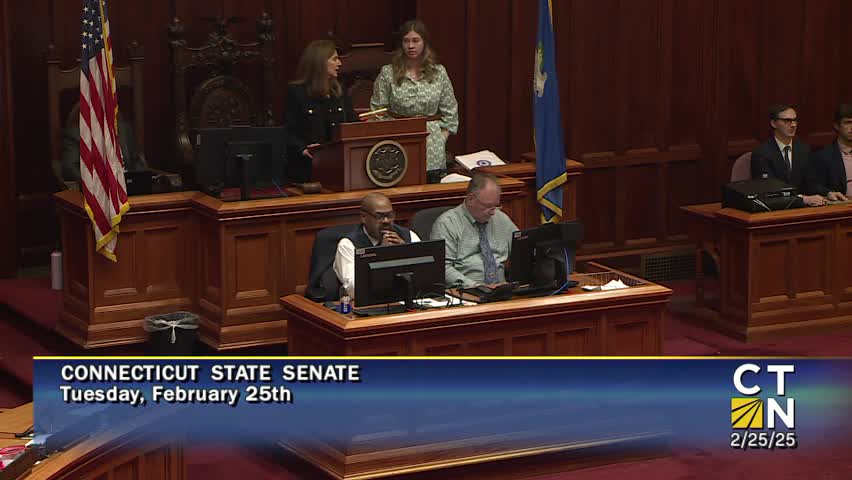
The Connecticut Senate on Feb. 25 approved an emergency-certified bill (House Bill 7067) establishing an expedited certificate-of-need (CON) track for ownership transfers of hospitals in bankruptcy, a municipal option on motor-vehicle assessment schedules, a clarified veterans property-tax exemption and a $40 million allocation for special-education excess costs.
The Connecticut Senate on Feb. 25 approved an emergency-certified bill (House Bill 7067) establishing an expedited certificate-of-need (CON) track for the transfer of hospitals under Chapter 11 bankruptcy, giving municipalities an optional motor vehicle assessment schedule, clarifying a property-tax exemption for veterans who are permanently and totally disabled with a 100% service-connected rating, and directing $40 million to the state’s special-education excess-cost reimbursement.
Why it matters: The CON change responds to the immediate risk posed by one multi-hospital system’s bankruptcy and the possibility of an imminent buyer; sponsors said pause or delay could threaten access to inpatient care and thousands of hospital jobs. The $40 million for special education is a midyear allocation meant to relieve districts facing steep outlays for high-cost placements and services.
Key provisions - Emergency CON application process for bankrupt hospitals: The bill creates a time-compressed review process for ownership transfers when a hospital system has filed for bankruptcy. Under the new procedure the Office of Health Strategy (OHS) must notify applicants within three days whether the CON filing is complete and render specified determinations on an accelerated timetable; the statute also authorizes OHS to require additional materials and, when appropriate, a public hearing with short notice.
- Motor vehicle assessment: Municipalities may opt to revise depreciation schedules for motor vehicle property assessments; adoption requires a local legislative vote and notice to the Office of Policy and Management (OPM).
- Veterans exemption: The bill clarifies that the property-tax exemption applies to veterans with a 100% service-connected permanent and total disability, aligning statute with legislative intent and providing clearer guidance to local assessors.
- Special-education excess-cost funding: The bill authorizes a $40 million appropriation to reimburse districts for high-cost special-education services in the current fiscal year. Sponsors said the funding responds to an immediate statewide crisis in special-education spending and will be distributed through the existing excess-cost formula.
Floor debate Sponsor Senator Anwar described the CON provisions as "critical" because hospitals affected by bankruptcy serve large patient populations and workforces; he told the Senate that three hospitals covered by the Prospect Medical Group proceedings employ about 6,000 people and serve roughly half a million residents. Other senators asked for procedural safeguards: some sought clearer mandatory timelines, additional public‑hearing opportunities if settlement terms change, and an appeal mechanism for agency decisions. Senator Summers and others pressed for specific language to avoid waiving longstanding contracting and procedural rules during an emergency review.
Vote and next steps The Senate approved the bill and ordered immediate transmittal to the governor. Agencies named in the measure — principally the Office of Health Strategy and OPM — will finalize procedures and public notices required by the statute; the special-education funding will be allocated to districts through the excess-cost reimbursement mechanism.
Ending note: Lawmakers of both parties said they intended further committee work on CON and special-education structure after the expedited steps in this bill, with additional statutory revisions and implementing guidance to follow in the coming weeks.