Get Full Government Meeting Transcripts, Videos, & Alerts Forever!
Get email alerts on the Special Education Funding topic
No spam. Unsubscribe anytime.
Senate approves $40 million emergency grants for special education after heated debate
Summary
The Connecticut Senate passed House Bill 7163 on emergency grants to municipalities for special education after rejecting two floor amendments that would have sharply increased funding and one unrelated amendment. Final vote: 26–7, with 3 absent.
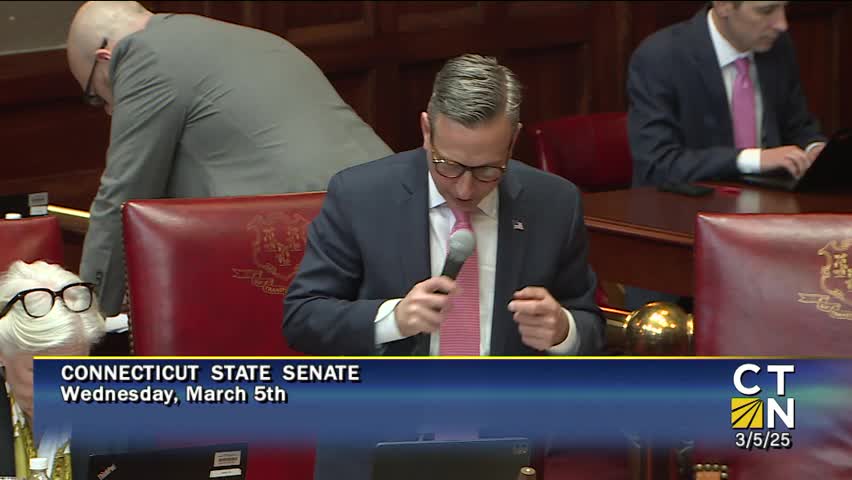
The Connecticut Senate on March 5 passed House Bill 7163, an emergency measure providing immediate grants to municipalities for special education costs, voting 26–7 with three senators absent.
Supporters said the bill was a critical, time‑sensitive response to school districts facing shortfalls in excess‑cost special education reimbursements and that the money was needed now to allow school budgets and hiring decisions to proceed. Opponents and several amendment proponents urged a larger, more transparent budgeting approach and pushed for a bigger one‑time allocation that would have been funded within the state’s fiscal guardrails.
The bill’s sponsor, Senator Gadkar Wilcox (Senator, mover), said the measure responded directly to requests from superintendents and boards of education heard during the new special education select committee’s listening tour around the state. “They came to us with desperate pleas that they needed funding now,” she told the chamber, asking colleagues to deliver immediate relief so districts could finalize budgets.
The Senate considered two major amendments to increase or redirect funding before final passage. Senate amendment A (LCO 5987), offered as a strike‑all to raise the current emergency allocation to $92,200,000 and place the money within the state’s regular budget framework, failed on a roll call (12–23 yes–no; 1 absent). Supporters of that amendment, including Senator Harding and Senator Gordon, argued the larger amount could be afforded within the state’s surplus and would more fully cover towns’ excess costs. Opponents including the bill’s sponsor and the majority leader said the $40 million option was the product of negotiation with the House and would be distributed more quickly under the current form.
Senate amendment B (LCO 6026), a separate substitute that would have required policies prohibiting biological males from participating in female school sports (a policy outside the bill’s core subject), was also offered and rejected by the Senate (10–23 yes–no; 3 absent). That amendment drew a separate, extensive floor debate in which proponents said it was needed to protect women’s sports and opponents argued it was unrelated to the special education funding measure and raised legal and civil‑rights concerns.
After debate and the failed amendment votes, the Senate approved House Bill 7163 as drafted by the House and transmitted the measure to the governor. The final roll call on passage showed 26 senators in favor, 7 opposed and 3 absent.
Why it matters: municipalities reported that excess‑cost special education reimbursements had been reduced in practice from expected levels, forcing districts to account for added expense in their current budgets. The emergency grants are intended to provide immediate relief while the legislature’s select committee continues work on longer‑term special education policy and financing.
What’s next: The bill will be sent to the governor for signature. Supporters urged rapid implementation to get funds to districts while they continue the wider review of special education funding under the committee.