Get Full Government Meeting Transcripts, Videos, & Alerts Forever!
Get email alerts on the Judiciary Appointments topic
No spam. Unsubscribe anytime.
Senate confirms Raheem L. Mullins as Connecticut chief justice after floor debate
Summary
The Connecticut Senate confirmed Raheem L. Mullins as chief justice of the Connecticut Supreme Court. The confirmation passed after floor remarks praising his modernization plans and several senators voiced opposition citing past court decisions and constitutional concerns.
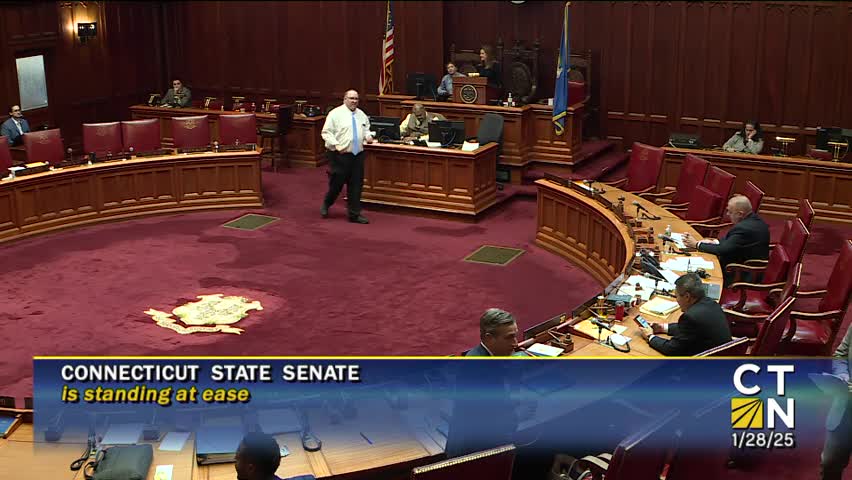
The Connecticut Senate on Jan. 28 confirmed Raheem L. Mullins of Farmington as chief justice of the Connecticut Supreme Court after a floor discussion that included both endorsements and objections.
Senator Winfield moved acceptance of the joint committee's favorable report and urged adoption, calling Mullins communicative with the Judiciary Committee and recommending confirmation. "He has, in his time in this role, been extremely communicative with the leadership of the judiciary committee," Winfield said.
Senator Kissel, speaking for the committee, offered a detailed endorsement noting Mullins’ priorities, including information-technology modernization for court facilities, improved access to court, and efforts to expand courtroom experience for younger lawyers. "He's very down the center. Very procedural minded," Kissel said, praising Mullins’ temperament and outreach to the branch and legislature.
Several senators registered objections. Senator Sampson said he would oppose the nomination and cited a pattern of rulings and the nominee's responses during the judiciary hearing. "I rise, in opposition to the, the current, nominee, Justice, Raheem Mullins," Sampson said on the floor, adding he had concerns about decisions on emergency-pandemic-era cases and questions Mullins' approaches to constitutional rights discussed in the judiciary committee. Senator Gordon likewise expressed concerns that some court decisions during the pandemic allowed constitutional protections to "fade," and cited Bushmaster v. Soto and other cases as examples that shaped his no vote.
A roll-call vote was ordered and taken; the Senate adopted the resolution and confirmed Mullins as chief justice. The clerk announced that the resolution passed.
Floor remarks described Mullins as energetic and focused on modernization and access, while opponents pointed to prior court decisions and answers during the committee hearing as reasons for voting no. The transcript records that debate and the roll-call vote were completed on Jan. 28.