Get Full Government Meeting Transcripts, Videos, & Alerts Forever!
Get email alerts on the Veterans Home Budget topic
No spam. Unsubscribe anytime.
Lisbon Veterans Home tells appropriators staffing, federal per‑diem and maintenance costs drive budget requests
Summary
Officials from the North Dakota Veterans Home (Lisbon) presented a detailed overview of operations, staffing challenges and a package of one‑time and ongoing budget requests; they asked the Legislature to approve optional items, clarified Melvin Norgard fund rules and requested exemption from the FTE funding pool for essential nursing positions.
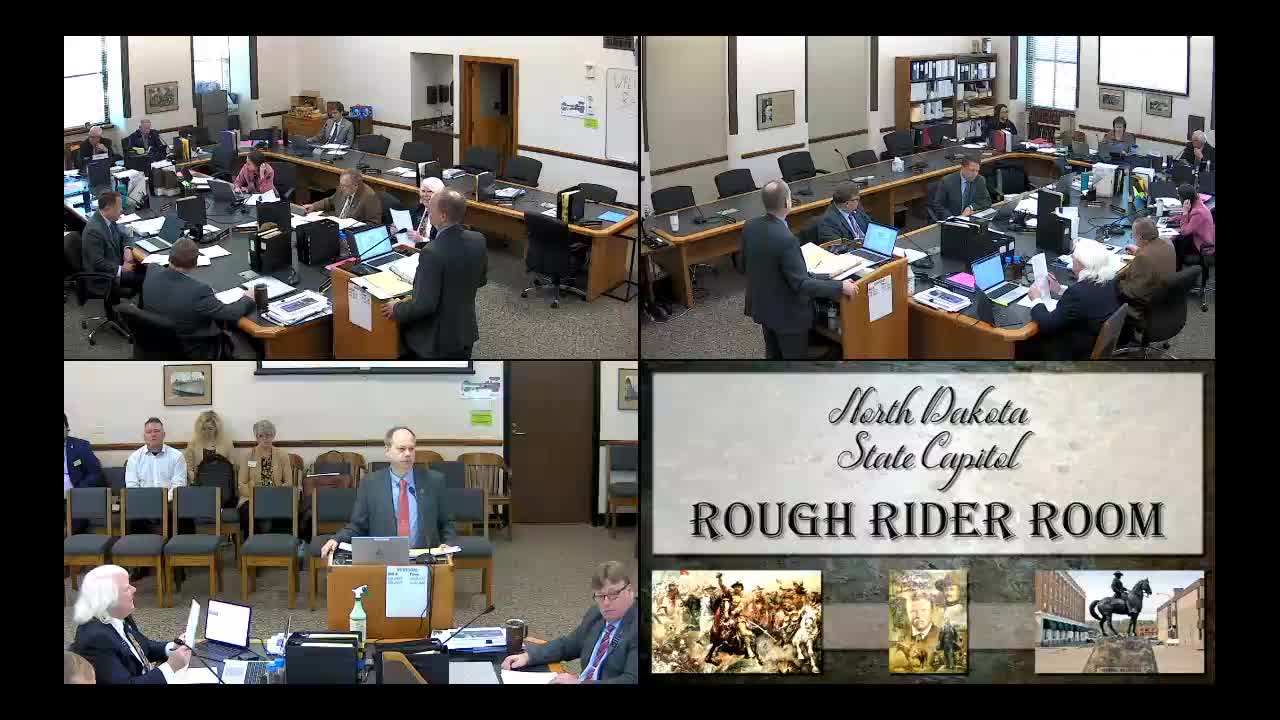
Kristen Munenberg, chief financial officer of the North Dakota Veterans Home in Lisbon, told the House Appropriations Committee, Human Resources Division, that the facility faces sustained staffing shortages and rising operating costs and asked the Legislature to approve a combination of ongoing and one‑time funding to maintain care levels.
Why it matters: The veterans home provides basic care and skilled nursing to state veterans; reductions in staffing or unaddressed operating costs could force reductions in admissions or services. The home also manages a donor‑funded Melvin Norgard account and sought legislative clarification about whether rents or user fees from new resident garages may be retained in that restricted fund.
Munenberg and new executive director Dane Gribble described facility operations and recent accomplishments, including reopening to volunteers after COVID, technology purchases for resident activities and completion of a pavement mill-and-overlay project. Munenberg told the committee the home has 98 basic‑care beds and 52 skilled‑nursing beds and listed the facility’s current biennium revenues and expenses: a current biennium total budget of $30,178,230, including $21,207,539 for salaries and wages, $6,078,175 for operating expenses and $2,845,082 for capital.
Munenberg summarized three central challenges: workforce shortages, higher contract‑staff costs, and federal per‑diem rules that leave the home to cover certain medical and dental expenses for highly service‑connected veterans. On workforce, she said the home’s average pay for CNAs is about $22.36 per hour while contracted CNAs can be paid $45–$55 per hour; she told the committee contract staff are “a band aid” and not a long‑term solution. The home reported a 50% turnover rate among CNAs and said it had vacancies among CNAs, RNs and LPNs during the current biennium.
Munenberg also told the committee that some COVID‑era medication costs—she cited Paxlovid as an example—can be roughly $1,400 per resident treatment; the home said it has been absorbing such costs and seeking federal or other funding sources.
On federal payments, Munenberg said the VA pays a per‑diem for veterans it deems 70% or higher service‑connected; the home applies that payment first to rent and any remainder is counted as per‑diem income. Munenberg told the committee that calculation yields only modest per‑diem income for the home (on the order of $50–$60 per month for some veterans), while the home frequently must cover pharmacy, dental and other costs the VA now bills to the facility.
The veterans home submitted an optional package totaling $2,394,171 that included requests for staff equity increases for nursing staff, three FTE restorations that had been removed during budget cuts, IT licenses, equipment replacements, facility maintenance and other items. Munenberg said the Senate version of the budget included the optional items and moved several elements from general‑fund to the home’s special‑fund account; she also noted the home’s special fund balance is substantial after the pandemic (she reported about $8 million) and the Senate used special funds to cover some items.
Munenberg raised one procedural and statutory question for the committee: the Melvin Norgard bequest fund is earmarked for resident benefit, and she asked whether income from rental of new garages/storage units could be retained in that fund rather than being swept into the veterans home general operating account under existing Century Code language. She said the question will require legislative clarification because the Melvin Norgard language and the operating‑fund language appear to conflict.
The home also asked to be excluded from the state “FTE funding pool” that withholds money for vacant positions; Munenberg said the nursing vacancies are essential to fill and, in practice, leaving positions unfunded in the pool increased overtime and contract costs and did not yield savings.
On audit and compliance, Munenberg said the state auditor’s performance review of the veterans home concluded there was only one finding, related to complaint handling. “There was only 1 finding in the report and that related to the handling of complaints,” she told the committee.
Ending: Committee members asked for follow‑up information on cost drivers, vacancy-to‑vacancy transition costs, expected contract nursing costs, and the statutory language governing the Melvin Norgard fund. The committee scheduled further budget detail hearings and tours; members said they would consider the Senate’s changes and the home’s requests in conference and detail work.