Get Full Government Meeting Transcripts, Videos, & Alerts Forever!
Get email alerts on the Cwd Feed Hunting Policy topic
No spam. Unsubscribe anytime.
Heated testimony as committee considers lifting hunting restrictions over supplemental feed; Game and Fish and scientists urge flexibility to manage CWD
Summary
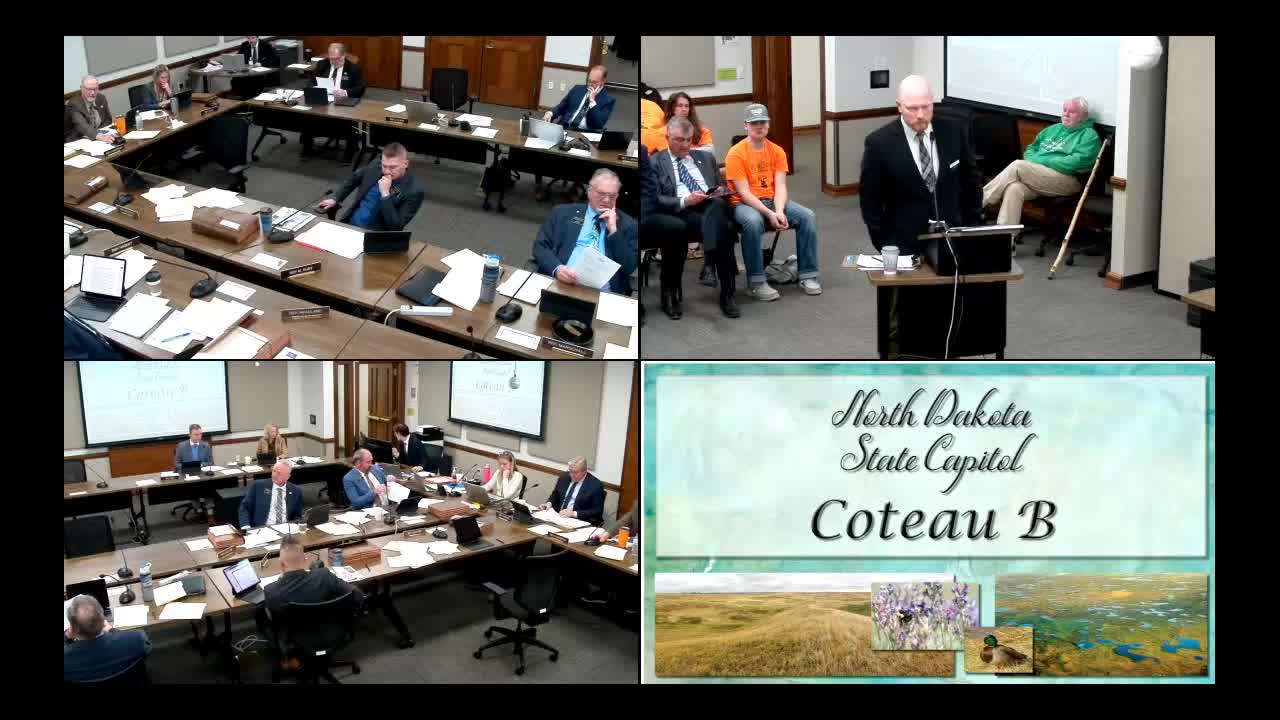
Senate Bill 2137, which would allow year‑round supplemental feeding and hunting over feed on private property, prompted hours of testimony from landowners, outfitters and wildlife scientists as the House Energy and Natural Resources Committee weighed competing claims about private‑property rights and chronic wasting disease management.
Senate Bill 2137, sponsored by Senator Keith Boehm, would allow supplemental feeding of deer on private property and permit hunting over feed year‑round on private land. The bill drew extensive testimony from landowners, hunters, industry groups and wildlife professionals during a prolonged committee session.
"This bill addresses inconsistency and restores rights of property owners to responsibly manage their land," Senator Boehm said. He disputed the weight of the state’s chronic wasting disease (CWD) restrictions and cited testing numbers during his testimony, arguing that feeding restrictions are not strongly supported by science and that landowners should be able to feed and hunt over their feed on private property.
Supporters included the North Dakota Farm Bureau (Daryl Lease), ranchers and outfitters who said the restrictions have harmed recreation businesses and family hunting traditions. Daryl Lease told the committee the Farm Bureau’s grassroots policy supports hunting over feed on private property and that the state board of animal health and governor retain authority to respond to disease outbreaks. Outfitters and landowners testified that unit restrictions have reduced bookings and local economic activity; one outfitter reported an 84% drop in bookings after a unit received a hunting restriction.
Opponents included wildlife professionals and veterinarians who warned that congregating deer at bait piles raises disease transmission risk. Phil Mastrangelo of the North Dakota chapter of The Wildlife Society said the chapter recommends a do‑not‑pass because the Game and Fish Department’s CWD management plan cites over 30 peer‑reviewed articles supporting restrictions in areas with infection risk.
North Dakota Game and Fish officials described a compromise approach they recently adopted for recommending baiting restrictions based on surveillance data and urged the committee to preserve the department’s flexibility through the governor’s proclamation. Dr. Charlie Bahnsen, the department’s wildlife veterinarian, said baiting restrictions are among the tools wildlife managers use to slow spread of contagious diseases and that removing the proclamation authority would create confusion in a rapidly changing disease landscape.
Public testimony reflected sharp disagreements about the science and policy. Supporters argued property‑rights, economic and access harms from restrictions; opponents pointed to outbreak examples in other jurisdictions and peer‑reviewed studies showing bait piles and feeders can increase contact rates and environmental contamination that facilitate CWD spread. Witnesses on both sides described data and studies to support their positions; committee members repeatedly asked the department for surveillance maps, unit data and clarifications about the agency’s guidelines for when to recommend restrictions.
No final committee action was recorded during the hearing. A four‑year sunset amendment to the bill was mentioned in testimony and materials; committee staff and department witnesses provided technical detail and several stakeholders requested clearer statutory language if the bill advances.