Get Full Government Meeting Transcripts, Videos, & Alerts Forever!
Get email alerts on the Invasive Species Spotted Lanternfly topic
No spam. Unsubscribe anytime.
State agriculture official urges Clarksburg to sign treatment agreement after spotted lanternfly detections
Summary
A West Virginia Department of Agriculture official told the Clarksburg City Council that a satellite population of spotted lanternfly has been detected on the city’s North Side and asked the city to sign a treatment agreement allowing state crews to treat municipal trees and vine hosts to slow the pest’s spread.
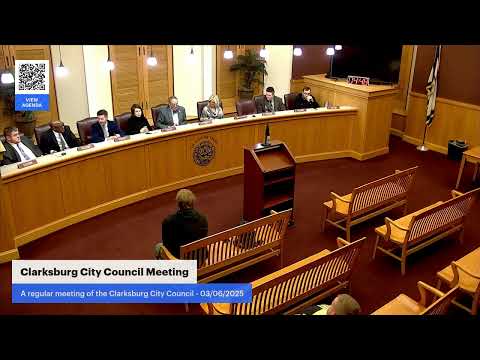
James Watson, coordinator of the spotted lanternfly program in the West Virginia Department of Agriculture’s Plant Industries Division, told the Clarksburg City Council on March 6 that the department has detected a satellite population of spotted lanternfly in Clarksburg’s North Side and is seeking a treatment agreement with the city to treat municipal properties.
Watson said the insect, an invasive pest from China, is associated with the invasive tree of heaven and can concentrate on cultivated grapes and several common forest trees. "Because of the large amount of tree of heaven and preferred host in the city, we have reason to believe that Clarksburg will probably follow a similar situation as what we've seen in Winchester, Virginia and Pittsburgh, Pennsylvania where the spotted lanternfly would mass in very large numbers," Watson said.
The department’s proposed agreement would allow state crews to apply treatments specifically to tree of heaven — the pest’s preferred host — on city-owned or city-managed property. Watson described the typical approach: smaller tree of heaven (about 5 inches in diameter or less) may be sprayed; in other cases crews apply a systemic insecticide to the bottom roughly 4 feet of the trunk and an herbicide to the bottom 18 inches of the trunk to limit non-target effects. He said the department prefers to use treated trees as "trap trees" rather than broad aerial applications when feasible, and stressed concerns about non-target vegetation and public exposure during any aerial treatment.
Marilyn Blake, a Clarksburg property owner who identified herself as part of L and M Rentals, told the council she has found tree of heaven and dead lanternflies on three properties she owns in the city (410 High Street in Colonial Heights, 913 James Avenue in Northview and 1326 George Avenue in Northview) and reported finding dead lanternflies on a Buffalo Lake barn during winter cleaning. "We have tree of heaven and Japanese lanternfly at 3 of our properties," Blake said during public comment, and asked the council to pursue eradication steps.
Watson told the council the spotted lanternfly feeds primarily on cultivated grapes and several forest species the department is watching in the region, naming silver maple, black walnut, sumac and red maple as of most concern locally. He said the insect spreads largely by hitchhiking on vehicles, materials and equipment, and noted the department has found the pest in 15 West Virginia counties.
City staff indicated they would take Watson’s materials and follow up. A council member said education for residents will be important so people know what to look for; Watson and staff said the department would provide information and that the city will be contacted about next steps.
Why it matters: Spotted lanternfly outbreaks can impose economic and ecological damage on vineyards, nurseries and certain forest species. The department’s request for a municipal treatment agreement would permit state crews to treat host trees on city property, a step Watson said could reduce the local pest population and lower pressure on private and agricultural properties.
No formal vote on a treatment agreement was taken at the meeting; staff accepted contact information from the department and said they would follow up with the state.