Get Full Government Meeting Transcripts, Videos, & Alerts Forever!
Get email alerts on the Zoning topic
No spam. Unsubscribe anytime.
Neighbors oppose rezoning at 919 Broadway for live‑work salon; staff calls proposal "spot zoning"
Summary
An applicant sought rezoning at 919 Broadway to permit a live‑work hair salon; city planning staff recommended denial, calling it spot zoning, while the planning board recommended approval.
An applicant requested rezoning of 0.107 acres at 919 Broadway Street from RLD (Low Density Residential) to CNC (Neighborhood Commercial) to allow a live‑work arrangement with a hair salon on the first floor and a residence above.
Staff report and recommendation
City planning staff reported the property has had a house since 1900 and said the current RLD district does not allow small-scale retail or walk‑in businesses. Staff explained the parcel was part of a subdivision and that the Clark County comprehensive plan envisions the area as a traditional low‑intensity neighborhood. The planning division recommended denial, calling the proposed CNC designation spot zoning and noting on-street parking and pedestrian-safety concerns; the city planning board recommended approval.
Applicant statement and parking plan
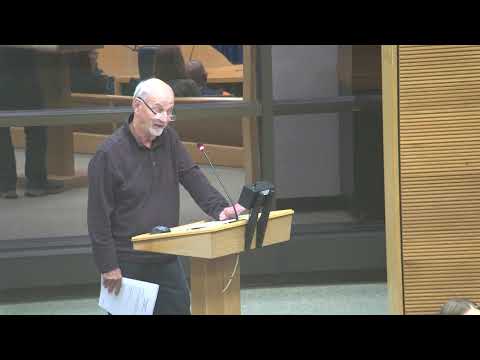
The applicant (identified during the hearing as the owner/representative) said the lot actually comprises a double lot and that the rear portion would be used for off‑street parking accessed via alleyways. The applicant said interior permits and floor-plan changes have already been approved and described the salon as appointment-driven with limited chairs and no intention of creating walk-in demand.
Public comment
Several neighbors, including Melissa Skinner and James Babiak, spoke in opposition. Concerns focused on tight existing street parking, children playing in the streets, potential damage to alleyways if used regularly for access, and the risk that an initial small business could be followed by more intensive commercial uses in the future.
Staff notes and code compliance
City service center and building-division staff commented that a backflow-prevention device and commercial-permit work may be required for a change in use. City code compliance noted an active exterior case at the address and that the owner has begun making repairs; city staff recorded prior orders to the owner.
Process and timeline
Commissioners and staff reminded speakers that the hearing was an introductory, first-reading step: the commission will consider an ordinance at a later meeting (two-week timeline was noted). No final rezoning vote occurred that night.
Why it matters
The matter raises typical neighborhood rezoning tensions: balancing property-owner opportunity and neighborhood commercial revitalization against parking, safety, and the precedent of changing single-parcel zoning within a residential block.
Next steps
The case will move to first reading and an eventual ordinance vote as required by the city's process. Staff will continue to coordinate permit, building and code issues, and residents were told they could return and comment again at the ordinance vote.