Get Full Government Meeting Transcripts, Videos, & Alerts Forever!
Get email alerts on the Shotspotter topic
No spam. Unsubscribe anytime.
ShotSpotter renewal due in 2026 as committee reviews data, with sharp public debate
Summary
The committee reviewed ShotSpotter and ResourceRouter data ahead of a 2026 contract renewal; police presented evidence of cases and recoveries while public commenters warned of civil‑liberties and reliability concerns.
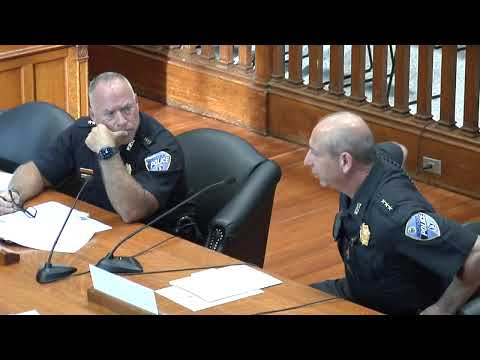
The Public Safety Committee on Sept. 9 reviewed a departmental briefing on the city’s ShotSpotter acoustic‑detection and ResourceRouter deployment tools as the contract approaches renewal on April 5, 2026. The committee accepted and filed the informational communication.
Chief Saucier told the committee the last contract (covering ShotSpotter and ResourceRouter) took effect April 5, 2023 and totaled $573,563; the department said the current contract will be reviewed before renewal. Saucier and other staff described operational results including: 84 ShotSpotter activations identified as confirmed gunshots, of which Saucier said 39 occurred without an accompanying 911 call; 2024 had 105 confirmed gunshot incidents in which physical evidence was found on scene; and activations aided recovery of crime guns, with department statements that 8 of 24 crime guns connected to recent investigations were recovered after activations. The chief also said investigators recovered 772 shell casings in the eight‑mile coverage area in 2024 and that, between Jan. 1, 2022 and Dec. 31, 2024, 24 homicide shootings occurred citywide, 14 of which were within the ShotSpotter coverage area.
The department described ResourceRouter as a data‑driven deployment tool that uses historic call data to direct foot‑patrol community engagement assignments for officers, with shift‑by‑shift assignments that change every eight hours.
Public commenters, including David Webb and another caller, said ShotSpotter is unreliable and has harmed communities by directing police activity to neighborhoods of color and by producing false positives tied to fireworks and other noises. Webb and others urged the committee to reject further contracts. Councilor Morris Bergman said neighborhood feedback he and colleagues hear indicates the program is popular in many communities because residents feel it improves response and evidence collection.
A councilor asked for follow‑up data on arrests and clearance rates associated with ShotSpotter activations and for summary data on medical aid provided by officers at activation scenes; the committee clerk AJ Pottle confirmed the committee had received two chairman’s orders, including one requesting follow‑up data.
Chair Councilor Kate Toomey moved to accept and file the report; the committee approved the motion by roll call with Councilors Bergman and Louis Ojeda voting yes.
Why it matters: The department frames ShotSpotter as an investigative and lifesaving alert tool that can identify incidents the public does not report; critics say it can misdirect police and disproportionately affect communities of color. The coming procurement decision ahead of the April 2026 renewal makes the data and community input salient for future council deliberations.