Get Full Government Meeting Transcripts, Videos, & Alerts Forever!
Get email alerts on the School Attendance topic
No spam. Unsubscribe anytime.
City Council advances bill directing study of chronic absences in Baltimore City Schools
Summary
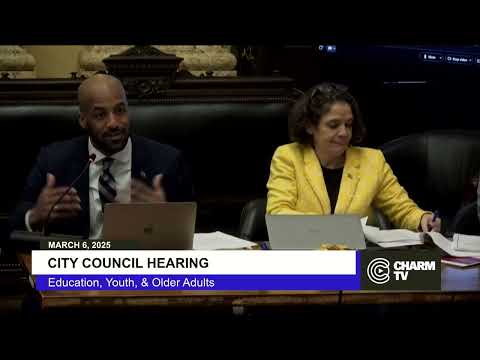
The Education, Youth and Older Adults Committee advanced City Council Bill 250002, which requires Baltimore City Public Schools to produce a study identifying root causes of chronic student absences and recommend cross‑agency interventions. The committee amended the measure and voted to send it to second reader.
Council members on the Baltimore City Council Education, Youth and Older Adults Committee voted to advance City Council Bill 250002, a study ordinance intended to identify root causes of chronic student absences in Baltimore City Schools and propose solutions involving city agencies, transportation providers and other partners.
The ordinance, sponsored by Councilman Mark Conway (Fourth District), asks Baltimore City Public Schools to produce a report analyzing drivers of chronic absence for school year 2024–25 and to propose interagency recommendations. The committee added technical amendments and cleared the bill for second reader after a recorded voice vote in which seven members voted yes and none opposed.
Why it matters: Committee sponsors said the study will help the city target limited resources — from school‑based attendance teams and community school coordinators to transit adjustments and housing supports — to areas with the greatest need. Committee members and agency witnesses repeatedly linked attendance to students’ access to school resources, transportation reliability and out‑of‑school factors such as housing and employment stability.
Committee chair Councilman John Bullock opened the hearing by calling attendance “a critical issue for our city” and said the bill aims to “explore the root causes of student absences to better identify solutions.” Sponsor Mark Conway noted state figures showing high chronic‑absence rates and framed the bill as an effort to identify interventions the city and partner agencies can take.
City Schools presented recent district data and strategies. A district official described steady improvements in several academic indicators and said chronic absence has improved from pandemic highs; the district reported a decrease from roughly 60% at the pandemic peak to about 48.7% in 2023–24 and said preliminary internal counts suggest a modest further decline. The district emphasized school‑level attendance teams, home visits, an on‑site support model operating in 96 schools, peer supports and continuous improvement cycles (Plan‑Do‑Study‑Act) as core strategies currently in use.
Holly Arnold, administrator for the Maryland Transit Administration (MTA), described the agency’s coordination with City Schools and its role in student mobility, saying, “We are a fairly large transit agency, thirteenth largest by ridership in The U.S.” Arnold said MTA operates roughly 185 supplemental school trips each day and that about 25,000 students use transit daily; she outlined recent steps to improve reliability, including hiring operators and reducing canceled trips.
Committee members pressed both City Schools and MTA on operational details and data gaps. Council President Z Cohen and others asked for the existing memorandum of understanding (MOU) between the district and MTA and sought clarification on what the city pays for specialized vs. general student transport. City Schools staff described three broad transportation arrangements: (1) yellow‑bus service for students allocated by route and distance rules, (2) specialized transportation for students with IEPs or under McKinney‑Vento (homelessness) requirements, and (3) MTA passes and supplemental service for older students. The district said special‑education transportation budgets are substantially larger than general supplemental service and estimated special‑education transportation in the tens of millions of dollars, while supplemental MTA trip costs were described roughly in the mid‑single‑digit millions annually.
Several council members urged closer cross‑agency planning to reduce long travel times for students, citing instances of commutes of 60 to 90 minutes or longer. MTA told the committee it cannot operate closed‑door charter service because of federal funding rules and that major rerouting may affect other riders, but it offered more coordinated planning with City Schools and the city Department of Transportation (DOT). MTA also volunteered data about the time savings from street‑level treatments (dedicated bus lanes and transit signal priority) and said the agency can work with DOT to model estimated travel‑time improvements for students.
Community partners and practitioners called for qualitative research and ground‑level outreach. Testimony from community organizations and the University of Baltimore’s Tackling Chronic Absenteeism Project stressed the value of home visits and ethnographic approaches to understand why students miss school and to build trusting relationships that support reengagement.
What the committee did: After reviewing written reports and agency testimony, members approved technical amendments that clarified the district’s voluntary collaboration and narrowed the scope to traditional (non‑charter) district schools and to the current 2024–25 school year for data collection. The committee then voted to pass the bill, as amended, to second reader.
Votes at a glance: Councilman James Torrance moved the motion to advance the bill; Council Vice President Shannen Green Middleton seconded. The roll call recorded the following votes on final passage to second reader: John Bullock — yes; Mark Parker — yes; Shannen Green Middleton — yes; James Torrance — yes; Zach Blanchard — yes; Jermaine Jones — yes; Odette Ramos — yes. Outcome: approved and advanced to second reader.
Next steps and context: The bill requires City Schools to prepare a report analyzing root causes of chronic absence for the 2024–25 school year and recommend interagency responses. Committee members requested that MTA, DOT and other city offices coordinate with the district in drafting feasible recommendations and that MEMA (state emergency management) and immigrant‑services considerations be included in follow‑up work. Councilmembers signaled openness to a future hearing focused specifically on transportation and committed to seeking MOU language and service‑level data to guide possible operational changes.
The committee’s actions do not themselves change school or transit operations; they require a study and a report that will be used to inform future policy choices and budget negotiations.