Get Full Government Meeting Transcripts, Videos, & Alerts Forever!
Get email alerts on the Public Health Committee Orientation topic
No spam. Unsubscribe anytime.
Public Health Committee sets vision, seeks deeper partnerships with hospitals and universities
Summary
At an orientation hearing, the Baltimore City Council Public Health and Environment Committee outlined a multi-year mission to address social determinants of health and invited University of Maryland Medical System and Johns Hopkins to expand partnerships and rapid-evaluation support for city programs.
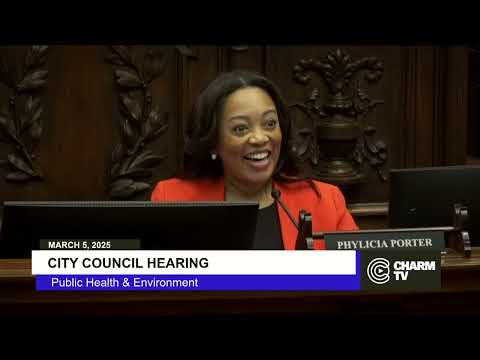
The Baltimore City Council Public Health and Environment Committee met for an orientation hearing where Chair Felicia Porter (Tenth District) outlined the committee’s mission and invited hospital and university partners to deepen collaboration on citywide public-health priorities.
Porter said the committee will “improve Baltimore’s overall health by addressing the root causes that shape the well-being” of residents and emphasized collaboration with city agencies, hospitals, universities and community groups. She added, “Public health is not a 1 size fits all approach.”
Why it matters: Committee members and outside experts told the panel that addressing social determinants — food access, housing, transportation, and behavioral health — will be central to reducing infant mortality, substance-use deaths and other persistent health inequities across Baltimore.
Samuel Barris, director of external affairs for University of Maryland Medical System, described the system’s footprint and capacity, saying the system employs “close to 30,000 individuals” and works with “4,600 affiliated providers” across hospitals and outpatient sites. Dana Farrakhan, senior vice president for community strategy and business development at the University of Maryland Medical Center, described a 2024 community health needs assessment (CHNA) that identified food access, housing, transportation, chronic disease management and behavioral health as priorities.
Johns Hopkins Bloomberg School of Public Health faculty member Vanya Jones said academic partnerships already support city programs such as Be More for Healthy Babies and COVID-era contact tracing. Jones outlined a Johns Hopkins small strategic consultant grant program that offers roughly $10,000 to help faculty support city agencies and said the school can provide rapid evaluations, interns and convenings to bring national or international evidence to local policy questions.
Community development and neighborhood leaders who testified urged the committee to use the partnerships Porter described to address local problems. Dr. Lisonbee Baer, speaking for Ridgely’s Delight, said her downtown neighborhood has been a food desert since 2007 after grocery closures and that residents without cars face about a 20-minute trip to the nearest store. Meredith Chaikin, CEO of the Greater Bay Brook Alliance, highlighted elevated overdose-call rates and long-term housing and environmental problems in South Baltimore neighborhoods.
Committee direction and next steps: Porter told attendees the committee will follow this orientation with task forces, working groups and legislative oversight hearings focused on behavioral health and other topics. She also said staff expect to examine procurement work under the Department of Public Works for new rat-control methods and to replicate successful food-access efforts in other neighborhoods.
No formal votes or ordinances were taken at the orientation hearing. The session concluded with Porter saying the committee will convene future oversight hearings and working groups to translate testimony into policy and accountability steps.
Ending: The committee adjourned after about an hour and announced forthcoming hearings and working groups to pursue the priorities raised at the orientation.