Get Full Government Meeting Transcripts, Videos, & Alerts Forever!
Get email alerts on the Parking topic
No spam. Unsubscribe anytime.
Downtown Troutdale businesses, residents raise alarm about construction parking and spillover to neighborhood streets
Summary
Residents and downtown business representatives told the Citizens Advisory Committee that a temporary construction parking plan and new apartments may push overflow parking onto adjacent streets, requesting city council follow‑up and clearer hours and enforcement.
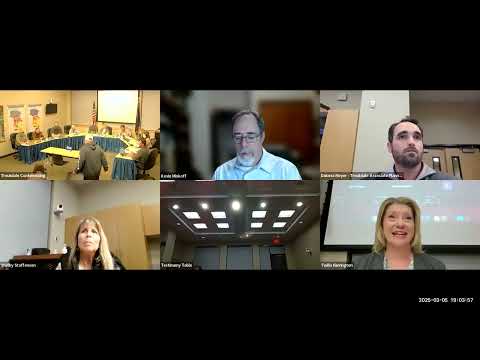
Residents and business representatives told the Troutdale Citizens Advisory Committee on March 5 that construction parking and a forthcoming apartment complex are already creating parking strain in the Old Columbia River Highway corridor and could push overflow onto nearby residential streets.
The most direct account came from Leah Michelle, identified in the meeting as a public commenter, who described recent worsening of daytime parking: “the construction parking is increasingly getting worse. As a matter of fact, we had our worst day we’ve ever had yesterday.” She said the city notice she received suggested a temporary parking restriction would run “8 until 6,” and worried that allowing parking to start in the late afternoon would encourage apartment residents to leave vehicles on neighborhood streets overnight.
Committee members and other speakers encouraged those affected to raise the matter with the City Council and with staff. Committee members noted that the Citizens Advisory Committee’s role is to gather public comment and help channel concerns to council and relevant departments rather than make final decisions on parking regulations.
City committee members and a speaker identified as Paul said the city has been coordinating signage and that Public Works staff (named in the discussion as Travis Holton and David Schaefer) would be the operational contacts for on‑the‑ground questions. Paul told commenters that “the signs were on order,” and advised that direct contact with Public Works would likely yield the most current information about installation and enforcement timing.
Speakers also suggested practical interim steps. Business representatives reported they sometimes secure informal parking arrangements—allowing staff to park on nearby private lots when businesses are closed—but said those stopgap measures do not address daytime construction demand. Committee members suggested the council and staff consider longer‑term strategies such as shared lots or shuttle services discussed in older corridor planning work.
The committee’s chair and members offered to flag the issue to staff and to remind the public commenter—who said she had received prior notices by email—that council and staff contacts exist for follow up. The final exchange directed the commenter to attend the next council meeting and to follow up with staff, while committee members agreed to pass along contact information to relevant staffers.
The discussion was a public‑comment item; no formal action or vote on parking measures occurred at the March 5 meeting. Committee members repeatedly urged residents and business owners to bring testimony to upcoming council or Public Works meetings, where decisions about hours, enforcement and any permit program would be set.
Looking ahead, committee members said the council’s schedule (several meetings were being finalized for April) would be the appropriate forum for formal changes to parking hours or for authorization of temporary permits or signage changes.