Get Full Government Meeting Transcripts, Videos, & Alerts Forever!
Get email alerts on the Administrative Rules topic
No spam. Unsubscribe anytime.
JCAR adopts standing rules, hears Legislative Service Bureau overview of rulemaking powers
Summary
The Joint Committee on Administrative Rules adopted its proposed standing rules and received a detailed briefing from Legislative Service Bureau counsel on JCAR’s limited post‑February authority, the rule‑making timeline, and options available to the committee for objecting to or delaying administrative rules.
The Joint Committee on Administrative Rules voted to adopt proposed standing rules and then heard an overview from Legislative Service Bureau counsel on how JCAR reviews state administrative rules and what powers remain after recent court decisions.
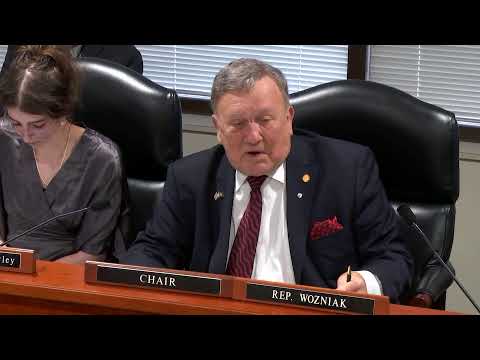
The committee, chaired by Doug Wozniak, approved the standing rules by roll call (8 yes, 0 no). Tim Reeves, counsel with the Legislative Service Bureau, told members that JCAR’s current authorities are limited and largely operate at the end of a lengthy rulemaking process administered through the Michigan Office of Administrative Hearings and Rules (MOHAAR).
Reeves summarized the stepwise process agencies must follow before rules reach JCAR: a request for rulemaking to MOHAAR, MOHAAR’s granting of that request, submission of draft rules and a regulatory impact statement to MOHAAR, a public hearing, and then submission of the final rules to JCAR. He said that “that process takes on an average 3 years.”
Reeves reviewed three discrete actions the statute currently permits JCAR to take once rules are before the committee. First, if the committee does nothing during the statutory review period, rules may be filed with the Secretary of State and take effect. Second, JCAR can propose changes to a rule; if the agency declines to make changes, the committee has further statutory steps available. Third, JCAR can object to a rule for one or more of seven enumerated statutory reasons; an objection requires bills to be introduced in both houses to rescind the rule, repeal the rule’s statutory authority, or otherwise address the subject of the rule.
On timelines, Reeves said rules must remain before JCAR for 15 session days (defined in statute as days on which both houses record a quorum) and that the committee may waive waiting periods in some circumstances. He also explained a statutory option that places rules “on hold” for 270 calendar days if JCAR votes to pursue enactment of the rule’s subject in statute; if corresponding legislation does not pass in that period, the rules may be filed and take effect.
Members asked how those powers operate in practice after a recent Michigan Supreme Court decision described in the presentation (Blank v. Department of Corrections). Reeves said the court ruling led the Legislature to amend the Administrative Procedures Act and that JCAR’s scaled‑back powers have been exercised sparingly since. He described two occasions since February when JCAR objected to rules; in one case bills were introduced but not voted on within the 15 session days, and in another case bills passed both houses but were vetoed by the governor.
Committee members also pressed staff on operational details. Rachel Huggert of the Legislative Service Bureau confirmed there are 36 rule sets currently pending before JCAR; Reeves said date calculations tied to the 15‑session‑day review are sensitive to whether particular calendar days qualify as session days and that he would recalculate and provide updated expiration dates to members by the end of the week. Representative Farhat sought confirmation about the committee’s practical ability to prevent burdensome rules; Reeves replied, “Yes. Although you do not have the power, this committee doesn't have the power just to reject the rule and kill it,” explaining that formal objections trigger a separate statutory process involving bills in both houses.
The committee also recorded a second procedural action: Representative Johnson moved to excuse absent members, and the motion prevailed by unanimous consent.
Members were reminded that JCAR may also use informal avenues—expressing concerns to agencies or holding hearings on already‑promulgated rules—and that individual legislators or committees retain the power to introduce bills to rescind or amend rules, subject to the regular legislative process.
Votes at a glance
- "Senator Bueno moves to adopt the proposed standing rules for the joint committee as written." Roll call recorded eight yes votes, zero nays; outcome: approved. (Mover: Senator Bueno; second: not specified.)
- "Representative Johnson moves to excuse absent members." Passed by unanimous consent; outcome: approved.
Ending
The committee adjourned after completing the briefing, votes to adopt standing rules and excuse absences, and a short discussion of next steps for staff timelines and committee oversight options.