Get Full Government Meeting Transcripts, Videos, & Alerts Forever!
Get email alerts on the Higher Education topic
No spam. Unsubscribe anytime.
Subcommittee hears higher education, community college budgets; Michigan Achievement Scholarship and tuition restraints highlighted
Summary
Senior fiscal staff outlined a $2.324 billion higher education budget and a $642.2 million community college budget, described use of the School Aid Fund in postsecondary funding, discussed tuition restraint conditions and the Michigan Achievement Scholarship, and flagged tensions with constitutional autonomy for public universities.
The House Appropriations Subcommittee on Higher Education and Community Colleges received a briefing on the state’s higher education and community college budgets that emphasized current funding levels, constraints tied to institutional tuition increases and expansion of state scholarship programs.
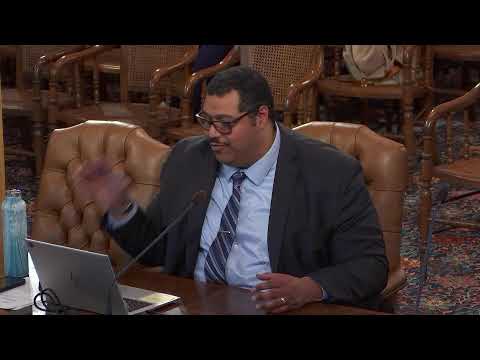
Perry Zylak, senior fiscal analyst with the House Fiscal Agency, told the subcommittee the gross higher education appropriation for fiscal 2025 is about $2,324,000,000, of which roughly $1,859,000,000 is state general fund/general purpose and about $461,700,000 is state restricted revenue (primarily the School Aid Fund). He said higher education represents about 3% of the overall state budget and about 13% of the state general fund portion.
Why it matters: the budget funds operational grants to 15 public universities, state financial aid programs and partial costs for institutions participating in the Michigan Public School Employees Retirement System (MPSERS). Zylak said the budget contains both ongoing increases (a 1.5% ongoing operations increase) and a 1% one-time operations increase for institutions.
Zylak described constitutional tensions between the legislature’s appropriation authority and the constitutional autonomy of public university boards under Article 8 of the Michigan Constitution. "Higher education is actually in Article 8 of the state constitution," he said, explaining that the constitution requires the legislature to appropriate funds but does not specify funding methods and that some legislative directions can fall into a legal gray area.
The committee heard details on state financial aid programs. The Michigan Achievement Scholarship is funded at $330,000,000 for fiscal 2025; Zylak said the scholarship includes multiple tracks including a community college "guarantee" that covers in-district tuition and fees for eligible students and up to $5,500 for new high-school graduates attending a public or private four‑year college. He said the Michigan Reconnect program is appropriated $52,000,000 for students 25 and older and that a temporary expansion to include 21–24‑year-olds ended in December 2024.
Zylak also described tuition restraints tied to new operations funding: institutions must limit resident undergraduate tuition and fee increases to no more than 4.5% or a stated dollar amount and must certify participation in transfer and reverse-transfer practices and other institutional best practices to receive the increases. He said all institutions certified those required practices in October.
Community colleges were presented as a sister budget. Zylak said the community college appropriation is roughly $642,200,000, almost entirely funded from the School Aid Fund with a $500,000 state general fund component. Community colleges receive most new funding through a performance formula that weights enrollment, completion metrics and local strategic value. He said the state has implemented an FYES funding floor for higher education (a $4,500 per FYES base) but not for community colleges.
Committee members asked follow-up questions. Representative Roth asked about FAFSA and whether delays in the redesigned federal FAFSA affected enrollment; Zylak called FAFSA "tricky and complicated," said the federal rollout delayed outreach and that both the department and some high schools were hindered, and said the House and MyLEAP have provided funding to encourage FAFSA completion. Representative Rogers asked how Michigan compares with other states on higher education funding; Zylak said he would follow up with comparative data.
No votes or formal actions were taken. Analysts said they would provide additional data on FAFSA outreach costs, scholarship cohort outcomes and how the state’s use of School Aid Fund dollars for postsecondary purposes has changed over time.
Looking ahead: Zylak said that the Michigan Achievement Scholarship’s cost projections assumed several cohorts and that full program costs could reach $500–$550 million once cohorts reach scale; the subcommittee can expect further stakeholder testimony on the scholarship and other financial aid programs during budget deliberations.