Get Full Government Meeting Transcripts, Videos, & Alerts Forever!
Get email alerts on the Air Force Readiness topic
No spam. Unsubscribe anytime.
Retired general warns Michigan House panel that U.S. Air Force is 'smallest, oldest and least ready'
Summary
At a hearing of the House Oversight Committee on Homeland Security and Foreign Influence, retired Brig. Gen. Doug O. Slocum told lawmakers the U.S. Air Force faces aging fleets, shrinking numbers and supply-chain limits that reduce readiness; he cited implications for Selfridge Air National Guard Base and Michigan’s homeland missions.
Retired Brig. Gen. Doug O. Slocum told the Michigan House Oversight Committee on Homeland Security and Foreign Influence that the U.S. Air Force is "the smallest, the oldest and the least ready" it has been since its 1947 founding, and warned that supply-chain and procurement shortfalls are shrinking the service's day-to-day availability.
Slocum, state president of the Air and Space Forces Association and a former commander at Selfridge Air National Guard Base, told the committee the Air Force is retiring aircraft faster than it is acquiring replacements and that mission-capable rates for key platforms have dropped. "In the next 5 years, we are programmed to retire almost a thousand aircraft," he said, and "at the same time, we're only buying about 250." He added: "Less than half" of the international F-35 fleet is mission-capable on any given day, citing supply-chain and maintenance constraints.
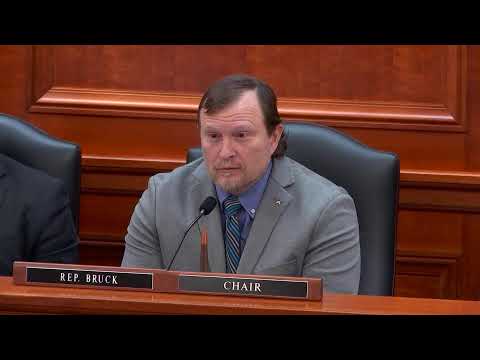
The committee chair, Representative Mentzer, framed the panel's role in homeland security and foreign influence before the briefing, saying the committee's objective is "to enhance the awareness and to safeguard Michigan by investigating, analyzing and exposing breaches in homeland security and hostile entities or countries of concern specifically the Chinese Communist Party's influence and impact on Michigan security." She told members the committee will produce recommendations, letters of concern and public awareness notices as part of its work.
Slocum used specific examples to illustrate aging platforms and capacity limits. He said the B-2 bomber program purchased 21 aircraft, has lost one to a crash and now operates about 20; he described several legacy aircraft that first flew decades ago, including the A-10 and older tanker models. He said the F-35 is the principal fighter in production but noted development delays and low mission-capable rates. Regarding force posture, he said the number of bomber aircraft available for worldwide operations on a given day was about 54 after accounting for training, testing and mission-capable rates; for fighters, he cited roughly 1,206 combat-capable fighters on paper but stressed much lower availability by mission-capable rate and deployment needs.
Slocum also warned of munitions and shipbuilding limits. He said U.S. forces have expended expensive precision munitions at high rates in recent operations — including naval missile use in the Red Sea — and that industrial capacity to surge production is limited. He said U.S. shipbuilding capacity is far below China’s and noted constraints in producing submarines and other vessels.
Members questioned how those national trends translate to Michigan. Slocum said Selfridge — home to the 127th Wing and more than 44 tenant organizations, including federal homeland-security elements and an air and marine border unit — provides both a federal warfighting contribution and state-level homeland-response capabilities. He cited Selfridge’s role in logistics during the Flint water crisis and said the base’s mix of missions and local talent are national assets: losing a fighter mission, he said, would have economic and readiness implications for the community and would risk losing locally based experience and skills.
Committee members asked about drones, recruiting, and the role of noncitizens in the force. Slocum said unmanned systems augment but do not yet replace manned fighters for certain long-range, high-capability missions; he described collaborative combat-aircraft concepts that pair manned jets with drone wingmen. On recruiting, he said the services have recently struggled but showed signs of recovery. On noncitizen service members, he emphasized vetting and security-clearance processes rather than a categorical exclusion.
The committee did not take policy votes at the hearing. Earlier in the meeting Representative Meerman moved to adopt the minutes from the Feb. 26 meeting; the motion prevailed by unanimous consent. The committee conducted a brief "show-and-tell" segment in which Representative Mentzer described a recent visit to the National Museum of the Air Force and distributed souvenirs to members before the briefing began.
The panel followed with a question-and-answer session and adjourned without formal action on policy recommendations; the chair indicated the committee plans multiple hearings over the coming sessions to develop products and recommendations on state security, foreign influence and related topics.