Michigan insurance regulator outlines consumer protections, auto no-fault changes and fraud unit to House committee
Loading...
Summary
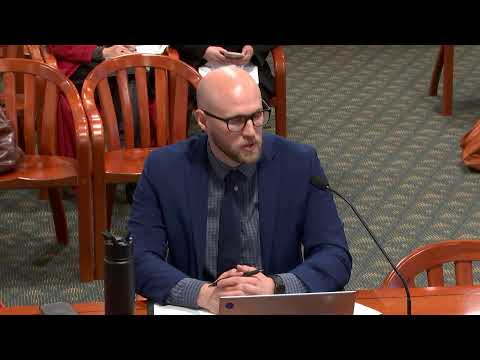
Joseph Sullivan, legislative liaison manager for the Michigan Department of Insurance and Financial Services, briefed the Michigan House Committee on Insurance on department functions, complaint volumes, recoveries, the state's auto no-fault reforms and the department's fraud and external review programs.
Joseph Sullivan, legislative liaison manager for the Michigan Department of Insurance and Financial Services, told the Michigan House Committee on Insurance that his department enforces state insurance and financial services laws, fields tens of thousands of consumer contacts each year and administers new requirements from Michigan's 2019 auto no-fault reform.
Sullivan said DIFS answered about 50,000 phone calls in 2024 and opened more than 9,000 formal complaints that year. "As a result of those complaints we recovered over $22,000,000 for your constituents," he told the committee. He said those recoveries include premium refunds, returned fees and payments of previously denied claims.
The department, Sullivan said, is fee-funded and oversees insurance companies, state-chartered financial institutions and licensees including producers (agents), adjusters and, most recently, pharmacy benefit managers. He described internal offices that handle consumer services, financial examinations, market conduct investigations and rate and form review.
Why it matters: Sullivan framed the department's work as protecting consumers and ensuring companies can meet obligations to policyholders. He described concrete, ongoing services for Michiganders: a live call center (8 a.m. to 5 p.m. weekdays), a dedicated auto-insurance hotline, and an online complaint portal through which consumers can request DIFS intervention.
Auto no-fault reforms and related programs
Sullivan summarized statutory reforms enacted in 2019 intended to lower costs while preserving benefits. Under those changes, insurers must reduce the statewide average personal injury protection (PIP) medical premium over an eight-year post-implementation period, and the state still allows, as an option, unlimited lifetime PIP benefits. He said a provider fee schedule for PIP medical took effect July 1, 2021, and the Michigan Catastrophic Claims Association (MCCA) reimburses insurers for PIP medical costs above a statutory threshold (Sullivan cited $635,000 as the referenced figure).
He outlined utilization-review requirements that let insurers judge medical appropriateness for PIP medical care and described DIFS's dispute-resolution process for appeals from medical providers. Sullivan said insurers now must file auto rate proposals with DIFS for prior approval and that the department uses external actuaries to review those filings.
Consumer protections added by the reform, Sullivan said, include a prohibition on using certain non-driving factors to set auto rates: marital status, homeownership, credit score, education level, occupation and ZIP code. He also noted that the reform created a fraud investigation unit and increased fines and penalties available to the department.
Fraud investigations and market enforcement
Sullivan described DIFS's fraud investigation unit, established administratively in 2018 and codified in statute in 2019, which investigates suspected criminal and fraudulent activity in insurance and financial markets and coordinates with local, state and federal law enforcement. He said complex investigations and outreach to law enforcement partners are core functions.
Market regulation work produced 180 new investigations in 2024, Sullivan told the committee, involving 411 respondents and resulting in about $3.3 million in interest recoveries and settlements during that year.
External review and appeals
Sullivan explained the state's external-review process for adverse health-insurance determinations (the Patient's Right to Independent External Review process). He said appeals using outside medical experts doubled since 2020, with the department receiving more than 2,000 appeals last year. "If a consumer needs a service or a prescription drug that their health insurer denies," Sullivan said, the external-review process permits an independent medical review and, where appropriate, an order that the insurer cover the service.
Licensing, filings and other measures
Sullivan reported increases in licensing activity and said DIFS processed 4,616 rate-and-form filings in 2024: about 36% property-and-casualty and 64% life-and-health. He described licensing and financial-examination processes for carriers seeking admission in Michigan and said the department relies on national accreditation standards developed by the National Association of Insurance Commissioners (NAIC).
Questions from members and staff
Committee members asked about how DIFS responds to court decisions that affect billing and coverage, the timing and audits of MCCA reports, carrier licensure and market-entry barriers, and whether DIFS has seen increased complaints about GLP-1 drugs. Sullivan said the department issues bulletins or FAQs to implement court decisions, that the MCCA is audited internally and subject to DIFS oversight, and that DIFS reviews individual complaints about GLP-1 coverage under existing policy terms and statutes. He said a recent budget item funded outreach to increase public awareness of the external-review process.
Votes at a glance
The committee approved the minutes from its Feb. 19 meeting by voice motion (no named mover recorded; "Out objection, so ordered"). Minority Vice Chair Carter moved to excuse absent members; the motion was stated as passed on the record.
Ending
Sullivan concluded by providing contact points at DIFS (including Renee, director of the Office of Consumer Services) and directing legislators to the department's website for publications, license lookups and consumer resources. Committee leaders thanked Sullivan and said they expect continued collaboration on cost drivers and fraud prevention.