Get Full Government Meeting Transcripts, Videos, & Alerts Forever!
Get email alerts on the Early Childhood Childcare topic
No spam. Unsubscribe anytime.
Subcommittee reviews MyLEAP budget, warns federal carryforward will run out and childcare caseloads have risen
Summary
The House Appropriations Subcommittee on Higher Education and Community Colleges heard an overview of MyLEAP’s fiscal 2024–25 budget and warnings that federal carryforward funds used to sustain the state childcare subsidy will be exhausted by fiscal 2026.
The House Appropriations Subcommittee on Higher Education and Community Colleges heard an overview of the Department of Lifelong Education, Advancement and Potential’s (MyLEAP) fiscal 2024–25 budget and warnings that federal carryforward funds used to sustain the state childcare subsidy will be exhausted by fiscal 2026.
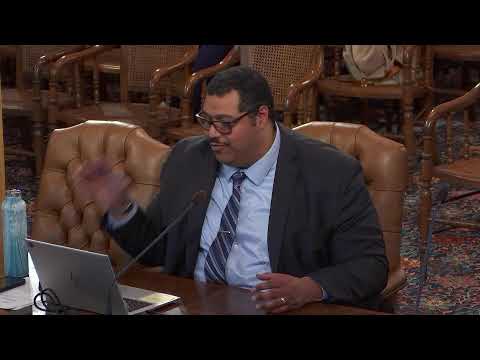
MyLEAP fiscal analyst Noel Benson of the House Fiscal Agency told the panel MyLEAP’s total appropriation is about $643,900,000 and that roughly 79% of the department’s funding is federal with 21% from the state general fund. "My LEAP overall accounts for less than 1% of the state budget," Benson said. He said 91% of that budget is directed to the Office of Early Childhood Education, including roughly $499,000,000 for the Child Development and Care scholarship program.
Why it matters: lawmakers were shown that eligibility for the Child Development and Care Program was raised to 200% of the federal poverty guidelines during the COVID era and the legislature kept that eligibility level after one-time federal funds ended. Caseloads have grown faster than assumptions, administrators said, and the federal discretionary carryforward the state has been spending down will be gone by fiscal year 2026 unless new funding is provided.
Benson told members that child development and care is currently appropriated at $499 million, of which about $429.5 million is federal Child Care and Development Fund dollars and $65.1 million is state general fund. He said the state has been using roughly $200 million per year in federal carryforward to sustain the program and that the carryforward has fallen faster than expected as caseloads rose.
The presentation included program details: the Child Development and Care Program serves families with incomes up to 200% of the federal poverty guidelines (about $51,600 annually for a family of three, Benson said, noting the guideline varies by family size). Provider reimbursement is set by state schedule and depends on child age, provider type and quality rating. Benson described licensed-exempt provider reimbursements as roughly $2.55 to $4.30 per hour and licensed providers as receiving between about $144 and $864 per two-week period, depending on hours of care.
Members pressed for more data and clarification. Representative Rogers asked whether increased funding for 4‑year‑old preschool could reduce slots for infants and toddlers: "Has there been any change, in the number of providers for newborn, like the 0 to 2 year old or newborn and toddlers in the state?" Benson said the concern is anecdotal and he did not have data on that question immediately available: "That is anecdotal. I don't have any personal data backing that up." He said he would try to obtain information for members.
Representative Roth asked what constitutes the "restricted funds" shown in MyLEAP’s funding mix. Benson said restricted funds include an adult foster care facilities licensing fund, certification fees, the child home and center licenses fund and the Michigan Merit Award Trust Fund, which he said comprises about two-thirds of that category.
Other MyLEAP responsibilities described to the committee include administering the Great Start Readiness Program (the state’s four‑year‑old preschool program, funded in the School Aid Fund but administered by MyLEAP), childcare licensing and regulation (moved to MyLEAP from LARA), the Early Childhood Investment Corporation, the Tri-Share Child Care Program, family engagement centers and certain postsecondary scholarship administration.
No formal committee action or vote was recorded on MyLEAP funding during the hearing. Staff and analysts said they would follow up with members on provider counts, more granular breakdowns of federal vs. state funding, and program-by-program cost detail to inform future budget decisions.
Looking ahead: Benson told the subcommittee members that to maintain current program guidelines after federal carryforward is depleted, the state will have to consider additional ongoing resources, but no specific legislative proposal was provided at the hearing.