Get Full Government Meeting Transcripts, Videos, & Alerts Forever!
Get email alerts on the Education Teacher Certification topic
No spam. Unsubscribe anytime.
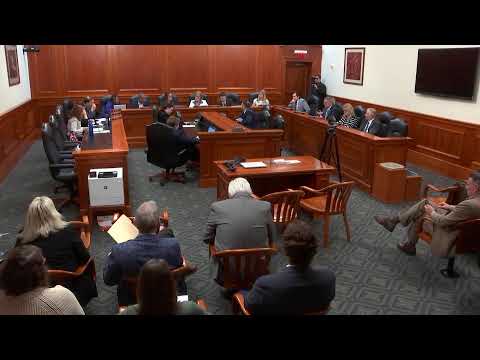
House education committee refers local teacher-certification bill after debate over CTE language
Summary
The House Committee on Education and Workforce voted 7-4 to refer House Bill 4153 (substitute H-1) to the House Committee on Rules after lawmakers and witnesses debated whether the bill would help career and technical education teachers or explicitly exclude them.
LANSING — The House Committee on Education and Workforce voted to refer House Bill 4153, substitute H-1, to the House Committee on Rules after lawmakers questioned whether the bill would allow local school districts to issue temporary teaching certificates for career and technical education or, instead, exclude those instructors.
Supporters said the bill is intended to let districts address staffing shortages by creating a locally issued interim certificate option; opponents and some committee members said the bill’s text appears to conflict with that goal. The committee approved the referral on a 7-4 roll call.
The bill sponsor and other backers described the measure as a tool districts could use voluntarily to fill open positions without requiring prospective CTE instructors to complete a full traditional teacher-preparation pathway. Representative Schmaltz, the bill’s sponsor, said the proposal is optional for districts and meant to provide local flexibility: "No. This is a local decision. I guess they can talk to each other and, you know, work up reciprocity between them. But they would have to establish their own requirements as a district," Schmaltz said during questioning.
However, Representative Wilson read language from the bill that raised immediate concerns about scope. "This subsection does not apply to an individual who is serving as a teacher for an industrial technology career program or career and technical education program," Wilson said, quoting from page 32. That apparent exclusion prompted members to press the sponsor for clarification about whether CTE instructors would be eligible under the local-certification path the bill creates.
Members also raised practical questions about implementation. Lawmakers and witnesses discussed a five-year renewal period mentioned in committee discussion and whether locally issued certificates could be portable if an educator moved to another district. One committee member said creating local approval processes could add administrative work for districts and that existing programs such as grow-your-own initiatives may already address some staffing gaps.
Witnesses listed in support included Ben Laughlin (Schools), Beth Deshone (GLEP Edge), David Randalls (Oakland Squiesenberry/MAPSA), and Dan Quisenberry (MAPSA). Olivia Ponte of the Michigan Department of Education testified in opposition. Committee debate touched on whether the bill would increase administrative burdens, whether districts would be able to ensure mentor and master-teacher support for locally certified instructors, and whether the bill’s text should be tightened to match the sponsor’s stated intent.
Vice Chair Linting moved to refer the substitute H-1 version of House Bill 4153 to the House Committee on Rules. The clerk’s roll call recorded 7 ayes and 4 nays; the motion prevailed. Committee chair DeBorde announced the committee adjourned following the vote.
The referral sends the substitute language for further consideration in rules, where members could recommend additional edits or scheduling for floor action.
Despite the referral, the committee did not amend the bill on the floor of this meeting; details such as the substitute’s full text, any planned amendments, and the timeline for further committee or floor action were not specified during the session.