Get Full Government Meeting Transcripts, Videos, & Alerts Forever!
Get email alerts on the Local Roads Infrastructure topic
No spam. Unsubscribe anytime.
County road officials tell House committee local system faces funding, permitting and bridge pressures
Summary
County Road Association of Michigan leaders told the House Transportation and Infrastructure Committee that counties own most of Michigan’s road mileage and bridges, face rising costs because culverts are increasingly classified as bridges, and need funding for wetland mitigation, disaster relief and research programs.
Denise Donahue, CEO of the County Road Association of Michigan (CRA), and Ed Noyola told the House Transportation and Infrastructure Committee that county road agencies operate most of Michigan’s road network and face growing costs for bridges, culverts and routine maintenance.
“First of all, we have 90,000 … centerline miles of road. That's 75% of the overall miles within the state of Michigan,” Ed Noyola said, putting the scale of county responsibility up front. He and Donahue said counties are responsible for a majority of local bridges as well — “a little over 5,800 bridges,” roughly 52% of the state total, according to their presentation.
The CRA told lawmakers why those counts and costs are rising: federal and state environmental permitting now require many culverts to be upsized. Noyola said that once certain dimensions are exceeded a culvert becomes classified as a bridge, which requires a different design, permitting and budget. “So if… the regs require us to upgrade or up a size, that's gonna require a bridge now rather than a culvert. That's gotten to be a real big problem for us, and it's a little hidden secret,” Noyola said.
The association outlined funding flows into the Michigan Transportation Fund (MTF) and the distribution formula that follows Act 51. CRA representatives told the committee the MTF receives roughly $4.1 billion in deposits that include fuel taxes and registration fees, but that many revenue streams are distributed off the top for specific uses before counties receive their share. The CRA’s slide deck summarized the external allocation as about 39.1% for the Michigan Department of Transportation (MDOT), 39.1% for counties and 21.8% for cities and villages.
CRA described several programs and innovations it says reduce friction or cost for local agencies. Those include the Oxcart e-permitting platform, in use by 78 of the state’s 83 county road agencies and several municipalities, and a seasonal-weight-restrictions mobile app tied to Oxcart that the association said has about 11,000 subscribers and quarter‑million website views.
The association also described a state-supported wetland mitigation program that buys or builds wetland credits to allow road projects to meet mitigation ratios. Donahue said the program receives $2 million a year deposited into a mitigation account, with an $8 million cap, and that CRA has used the funds to acquire wetland credits; the group showed a recent 14.5-acre forested-wetland purchase in Oakland County that serves a 13-county watershed.
CRA officials outlined continuing needs and proposals: a local road research program the association is seeding (CRA described a $1 million appropriation in fiscal 2025 to support research and development for local-road innovations), a “road conductor” project management platform and a disaster-relief mechanism for local agencies. The presenters said a $5 million general‑fund seed for a local disaster relief account was appropriated in a prior year but that, because the account or program structure was not established in time, the money lapsed; CRA asked lawmakers to reauthorize seed funding and explore a larger contingency account (CRA discussed figures of $20 million to $50 million as target program sizes).
CRA also summarized unmet needs from its 2023 County Road Investment Plans: the association reported a statewide, local-system shortfall of about $2.4 billion to maintain current conditions as of early 2022, and noted one billion dollars of local bridges currently classified as closed, serious, critical or weight‑restricted per MDOT's Bureau of Bridges.
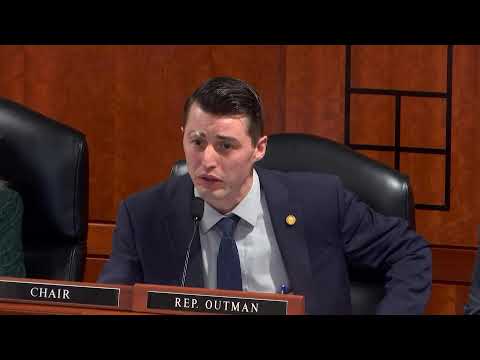
Committee members asked clarifying questions during the presentation about the wetland bank, the scope of a proposed disaster-relief program, federal‑aid buyout mechanics and whether counties receive reimbursement for contracted MDOT trunkline maintenance. CRA representatives said 63 counties maintain some MDOT trunk lines under contract and receive reimbursement under separate contracts, and they described a federal‑aid “buyout” program that allowed state money to replace federal aid in some projects; CRA said that program was suspended in 2025 because of state revenue constraints at MDOT.
The CRA left a packet of slides, an investment plan and a quarterly magazine with the committee. Donahue said the association’s 2025 investment report was in progress and expected by June.
Ending: CRA asked the committee to consider reestablishing seed funding for a local disaster-relief account, to sustain or restore federal‑aid buyout options, and to support the association’s research and project‑management efforts that it said would reduce cost and improve permitting and asset management at the county level.