Get Full Government Meeting Transcripts, Videos, & Alerts Forever!
Get email alerts on the Appropriations topic
No spam. Unsubscribe anytime.
Michigan State Police budget for FY25 totals $953.1 million; $10 million added to disaster fund
Summary
House Appropriations subcommittee heard a presentation on the Michigan State Police fiscal 2025 operating budget, including a $953.1 million gross appropriation, a $646.9 million general fund share, funding for trooper recruit schools, and a $10 million replenishment of the Disaster and Emergency Contingency Fund.
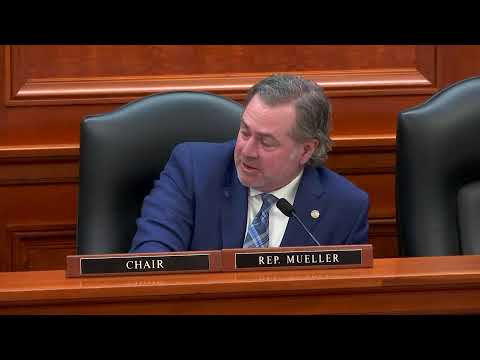
The House Appropriations Subcommittee on Michigan State Police heard a presentation on the department’s fiscal 2025 operating budget that showed a $953.1 million gross appropriation, with $646.9 million coming from the state general fund.
Aaron Meek, a fiscal analyst with the House Fiscal Agency, told the committee the budget mixes general fund dollars, federal grants, state restricted funds and reimbursements from local governments. “The general fund appropriation which totals $646,900,000,” Meek said, “is about two-thirds of the total gross budget.”
Why it matters: the Michigan State Police budget funds statewide patrols, investigations, forensic laboratories, emergency management and grant programs that local law enforcement agencies rely on. The size and composition of the appropriation determine how many uniform troopers, forensic analysts and specialized teams MSP can staff and deploy.
Meek walked members through the department’s seven appropriation units. Field services, which includes road patrols and post operations, is the largest unit at roughly $471 million gross; about $390 million of that is general fund. Specialized services — which covers the commercial vehicle enforcement division, aviation and the bomb squad, K-9 and other tactical teams, and Emergency Management and Homeland Security Division (EMHSD) — accounts for about $171.2 million. Law enforcement services, which includes the forensic services division (FSD) and the Criminal Justice Information Center (CJIC), is about $132.2 million.
The presentation highlighted several line items and program-level details: the trooper recruit school onboarding, training and outfitting line received $5 million in general fund in fiscal 2025 and additional training operations funding of about $8.3 million gross. Meek said the department has used attrition-related dollars to staff recruit schools and that current funding would yield roughly 20 new troopers in fiscal 2026, producing a net gain of about a dozen after accounting for attrition.
Forensics and information services: FSD received a $49.4 million appropriation and operates seven accredited forensic facilities statewide. Meek said the forensic backlog has dropped about 59% since its peak in fiscal 2016, with the largest improvements in controlled-substance and toxicology cases. CJIC fee revenue — roughly $38 million in fiscal 2025 — funds IT projects and departmental administration; Meek said more than 30% of CJIC fee revenue is appropriated for IT work.
Disaster and Emergency Contingency Fund (DCEF): the budget includes a $10 million one-time appropriation to replenish the DCEF, which Meek said was depleted in response to the Flint water crisis in fiscal 2016. He noted the legislature amended the Emergency Management Act after that event to require the fund balance be maintained between $2.5 million and $10 million.
Other one-time appropriations in the budget include cold-case investigations support, disaster recovery grants for localities not covered by FEMA, assistance for communication accessibility in law enforcement training, security at Michigan International Speedway, and a $10 million Public Safety Academy assistance program for recruit scholarships and salary support for cadets. Meek said MCOLES may use up to $140,000 of the academy assistance appropriation for administrative costs.
No formal questions or motions were recorded on the presentation during the subcommittee meeting, and the committee adjourned after Meek finished his overview.