Get Full Government Meeting Transcripts, Videos, & Alerts Forever!
Get email alerts on the Tax Transparency topic
No spam. Unsubscribe anytime.
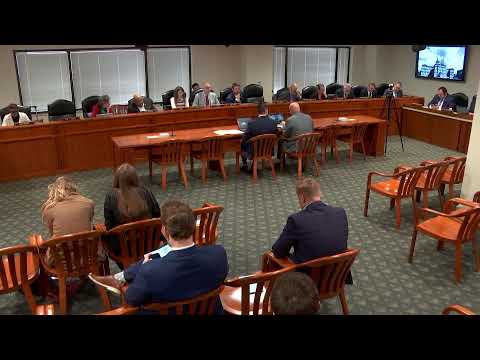
House panel hears bill to send taxpayers an annual ‘receipt’ showing where state income tax dollars go
Summary
Rep. Bierlein told the House Finance Committee that House Bill 4,019 would require the Michigan Department of Treasury and the State Budget Office to provide annual revenue reports to individual income-tax filers showing revenue sources and fund distributions; members asked about cost and delivery method; no vote was taken.
Representative Bierlein told the House Finance Committee on March 4 that House Bill 4,019, the Taxpayer Receipt Act, would require the Michigan Department of Treasury, in collaboration with the State Budget Office, to issue an annual revenue report to each individual who files a state income tax return.
Bierlein said the report would show total revenues collected (broken down by wage and salary withholdings, quarterly payments, flow-through entity tax and annual payments), total refunds issued and distributions to named state funds including the general fund, the School Aid Fund, the Michigan Transportation Fund, the Renew Michigan Fund and the state campaign fund. “House Bill 4,019, the Taxpayer Receipt Act,” Bierlein said, “will finally provide a clear and concise answer ensuring that citizens know exactly how their money supports the state.”
The sponsor framed the measure as a transparency and accountability reform, saying many taxpayers lack a clear, consolidated view of how state income tax revenues are allocated. He said the bill would begin with the 2025 tax year and that staff are working on amended language to reduce department cost and administrative burden.
Committee members pressed the sponsor on implementation costs and delivery. Representative Pies asked, “would you be including in all this information that you provide to the taxpayer the cost of this program as well?” Bierlein replied, “Probably not.” Bierlein said House Fiscal had estimated a mail-option cost of about $4,200,000 and that the bill team was exploring online dashboards and other ways to present existing information more clearly so taxpayers will actually see it.
Representative Leiker noted that some informational charts are already published in booklets and online and questioned whether the bill would create a redundant expense; Bierlein said printing and mailing appear to be off the table and the focus is on making currently available information easier to find and understand. The bill drew one submitted card in support from James Hohman of the Mackinac Center for Public Policy; no formal committee vote was recorded in the transcript.
The committee did not take formal action on HB 4,019 during the hearing. The discussion centered on the report’s contents, the delivery method (electronic versus mailed paper copies) and the administrative cost to produce and distribute the report.