Get Full Government Meeting Transcripts, Videos, & Alerts Forever!
Get email alerts on the School Board Visitation Protocols topic
No spam. Unsubscribe anytime.
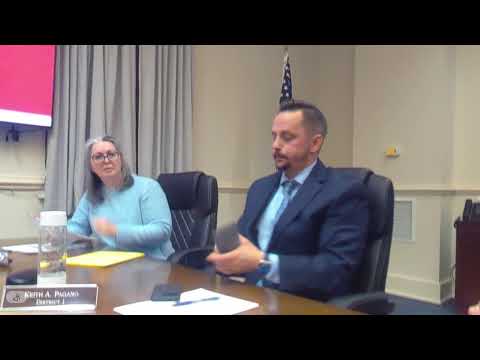
New Kent school board directs superintendent to write formal rules for board member classroom visits
Summary
After a lengthy discussion about classroom visit expectations, the New Kent County School Board directed Superintendent Dr. Nichols to convert the group's draft visitation guidance into a formal regulation and to circulate a final draft for review.
The New Kent County School Board on Feb. 27 directed Superintendent Dr. Nichols to draft a formal regulation spelling out how and when individual board members may visit schools and classrooms.
Board members said the move is intended to remove ambiguity from existing policy, protect student privacy, reduce disruption in classrooms and provide a single, transparent path for board members to collect information tied to board duties.
Discussion centered on three recurring concerns: how to balance a board member’s desire to observe classrooms with the chain of command and administrative responsibilities, how to avoid disrupting instructional time, and how to protect personally identifiable student information. The board’s draft guidance includes: one classroom visit per board member per quarter as a baseline, a process to request additional visits, a requirement that members notify the superintendent when they intend to visit a building, a directive that members email a short summary of their visit to the full board (without initiating real-time discussion), and a prohibition on making individual requests to teachers or staff for data or reports (those requests should be routed through administration).
Board members described differing views. Some said a regular cadence of visits helps governance and oversight, while others cautioned that individual visits can create the appearance of impropriety or place board members in conflict when later adjudicative decisions about personnel arise. Several speakers noted that brief, ad-hoc classroom observations can produce uneven information — for example, a visit during testing or a field trip would not be representative — and argued the regulation should clarify when and how observations should be scheduled and reported back to the full board.
The board discussed a timeline drafted in the session for initiative-driven visits and policy work: present a short notice of intent 30 days before a regular session, allow the board to vote whether to pursue the item, and if approved provide 30 days to prepare materials for a first reading. Several board members said the 60-day framework (30 days to bring an idea forward, then 30 to prepare) gives time for vetting and for administration to support the effort, while others said it could slow urgent matters.
At the end of the discussion the board voted 5-0 to direct Dr. Nichols to convert the visitation guidance discussed in the meeting into a regulation (to be filed as a superintendent regulation linked to existing policy), circulate the draft to board members, and return the item for final approval.
Board members and administrators said the regulation will be refined after the superintendent drafts it and shares the text; board members may request further edits before final adoption. The board also asked that the finished regulation make explicit the process for notifying administration, clarify who to notify (building administrator versus superintendent), and restate the confidentiality obligation so that personally identifiable student information is not shared publicly.
The board’s action follows months of informal visits by members and earlier conversations about whether the division’s policy language is sufficiently specific. Officials in the meeting referenced similar debates at area school boards and legal guidance that characterizes visitation authority as ambiguous without local guardrails.
The superintendent said he will format the guidance as a regulation (KKR-style) attached to existing policy and distribute it for review before the next regular session. The board did not adopt the regulation text on Feb. 27; it voted to direct the superintendent to draft the regulation and circulate the proposed final wording for the board’s consideration.