Get Full Government Meeting Transcripts, Videos, & Alerts Forever!
Get email alerts on the Student Assessment topic
No spam. Unsubscribe anytime.
Rock Hill presents winter NWEA MAP results showing districtwide gaps; board presses for accountability and targeted support
Summary
District staff presented winter NWEA MAP formative-assessment projections showing achievement and growth challenges across grade levels; board members questioned professional development, middle-school supports and whether district oversight and accountability are sufficient.
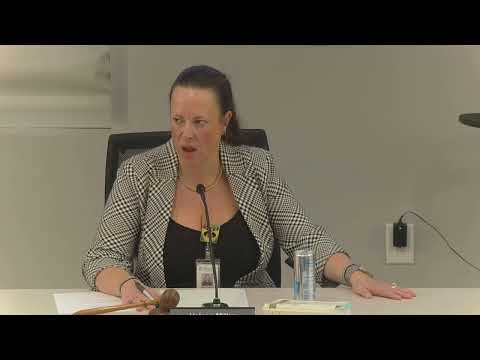
District assessment staff told the Rock Hill School Board on Feb. 25 that winter NWEA MAP results provide predictive data for the state SC Ready assessment and show that many grade levels are not yet on track to meet state proficiency thresholds.
Christina Dickey, presenting the district's formative-assessment overview, said NWEA MAP is administered in grades 1–8 (with some high school ELA participation), is given three times a year, and supplies predictive and strand-level data the district uses to plan instruction. Dickey told the board the winter administration was timed strategically before winter break so schools would have ample time in the second semester to respond to the data.
Dickey and colleagues described measurable uses for MAP data: identifying foundational gaps, aligning instruction to standards and predicting likely SC Ready outcomes. They said MAP projections typically align closely with end-of-year results and stressed the tool's role in planning small-group instruction and monitoring growth versus achievement.
Board members asked for specifics about third-grade math declines, middle-school intervention capacity, and whether professional development (PD) offerings were sufficiently targeted and required. One board member noted third grade is “our rate to succeed” and asked why some grades dipped from fall to winter.
District leaders acknowledged dips in winter data and said kindergarten–second-grade foundational work and middle-school intervention capacity need attention. Dr. Katie Barber (executive director, elementary education) and other instructional leaders described revised expectations for principals to perform at least three instructional walks per week and for district specialists to work inside schools on co-teaching, coaching and PLC (professional learning community) support. The presenters said they are intensifying small-group instruction, deploying content specialists, and monitoring learning progressions.
Several board members pressed for stronger accountability when schools or staff decline PD offerings; presenters said the department serves as a support unit and that many professional-learning offerings are optional, though schools are expected to implement their continuous improvement plans. Board members expressed concern that optional PD could weaken districtwide consistency.
Superintendent Doctor Jones and other leaders said the district is focused on continuous improvement and growth, and that turnaround work typically takes several years. Jones said the district will continue to provide targeted, research-based support and asked the board for patience while the work scales.
No formal action was taken during the presentation; board members requested follow-up information about which schools are meeting growth and which practices are replicable across the district.