Get Full Government Meeting Transcripts, Videos, & Alerts Forever!
Get email alerts on the Alternative Education Expulsion topic
No spam. Unsubscribe anytime.
Waterbury reports early progress at State Street expulsion academy; 40 students enrolled and credit recovery underway
Summary
District staff reported that the expulsion academy at State Street has enrolled about 40 students, reports 70% daily attendance, zero on-site discipline referrals and early credit recovery successes for high-school students.
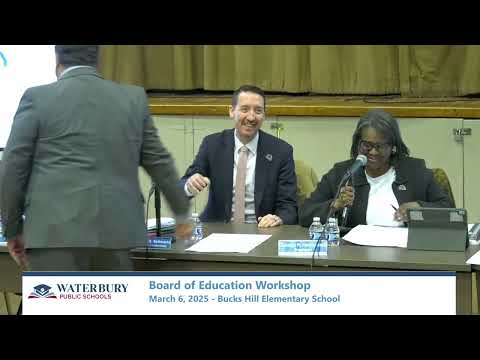
District staff provided the board an update March 6 on the expulsion academy housed at State Street (38 Church Street), which serves students removed from regular schools under disciplinary procedures.
Why it matters: The program is a district-managed alternative offering evening instruction and supports intended to keep expelled students connected to coursework, social work supports and community services with the goal of academic recovery and safe reentry.
Program staff reported 40 enrolled students as of the day of the update, split roughly between middle- and high-school cohorts. The presenter said daily average attendance is about 70 percent, and that the program had recorded zero on-site discipline referrals during the first six weeks.
Academy staff described schedules that begin around 4 p.m. and run to about 7:30 p.m., transportation provided by Durham Transportation, blended academic blocks for ELA and math with Imagine Learning and credit‑recovery opportunities. The report noted 12 high‑school students completed Imagine Learning courses in a six‑week span and five twelfth‑grade students remained on track to graduate in June.
Staff described wraparound supports coordinated with community providers: the health department, juvenile probation check‑ins, Klingberg Family Centers virtual supports, Wellmore, UCC, YMCA and Project Longevity. Planned programming includes summer employment outreach, vocational and mental‑health presentations, and small group interactions with community partners.
Director-level board members praised the program; one commissioner asked about the maximum program capacity (staff said the current staffing model supports about 40 students and that 50–60 would require additional staffing). The presenter summarized individualized learning plans (ILPs) used for transitions, attendance, behavior and academics and said early readmissions have been granted on a case-by-case basis.
The presentation was informational; no formal policy action was recorded in the workshop minutes.