
Waterbury special education director reports staffing steps, new partnerships and mental-health supports
Get AI-powered insights, summaries, and transcripts
Sign Up Free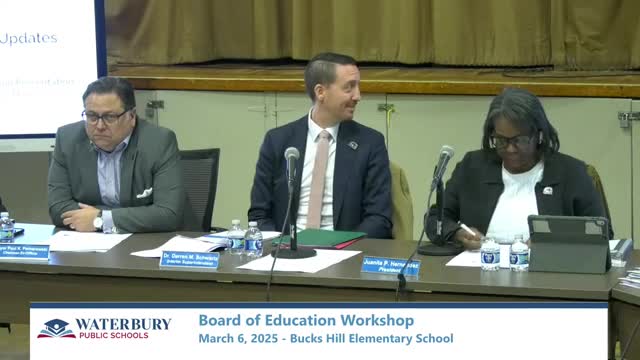
Summary
Director Wendy Johns told the board the district is using pipelines and no-cost partnerships to fill vacancies and expand services, and outlined MTSS, AbleNet and other initiatives.
Wendy Johns, Waterbury’s director of pupil services, briefed the Board of Education on March 6 on special education staffing, service provision and district mental‑health partnerships.
Why it matters: Special education and pupil services touch students with disabilities across the district and involve compliance, grant use and contracts that affect budgets and student outcomes.
Johns said the district is addressing vacancies in special education supervisory and service roles and developing pipelines with local institutions. She described the use of a paraeducator-to-teacher pathway and temporary authorizations: “Currently we have 11 long-term para SPED authorizations that are currently being utilized,” she said, and staff are working with Southern Connecticut State University to develop a DCEP pipeline to hire school psychologists.
Johns summarized professional development priorities — de‑escalation training, functional behavioral assessment and behavior intervention planning using the Prevent, Teach, Reinforce framework — and described a new AbleNet partnership that can place assistive technology in students’ homes through families’ insurance coverage.
She outlined pupil services’ network of no-cost mental‑health providers and programs: CMHA clinicians, DESA SEL screening for K–8, CJR clinicians in six schools, Sandy Hook Promise’s Say Something program, Klingberg Family Centers (recently approved by the board) and crisis-response protocols. Johns said the district is monitoring out‑of‑district placements with an “outplacement matrix” and has modified contracts and transportation expectations to control spending.
During Q&A Commissioner Serrano O’Donnough asked about hospital transport and follow-up; Johns said district safety protocols permit schools to call 211 and — with parent permission and signed releases — to receive clinical transition plans and coordinate post‑discharge support. Commissioner O’Brien asked for the exact count of students on medical homebound; Johns offered to supply the number after the meeting.
Johns also described work on Indicator 12 compliance (birth-to‑3 services) with the Office of Early Childhood, and said IDEA grant spending is being aligned to needs-based funding.
Her presentation was informational; no new contracts or votes were recorded on the special education update at the workshop.