Get Full Government Meeting Transcripts, Videos, & Alerts Forever!
Get email alerts on the Fund Balance Policy topic
No spam. Unsubscribe anytime.
Finance staff proposes raising board fund‑balance target from 16% to 20%
Summary
Finance staff revisited the district’s fund‑balance policy (DIG), explained the policy’s history and GFOA guidance, and recommended the board consider increasing the minimum undesignated fund balance from 16% to 20% to strengthen fiscal posture for future borrowing and bond ratings.
Finance staff presented a proposal to consider raising the district’s minimum undesignated fund‑balance target, explaining the policy’s origins, the Government Finance Officers Association (GFOA) guidance the policy follows, and the possible effects on bond‑rating discussions.
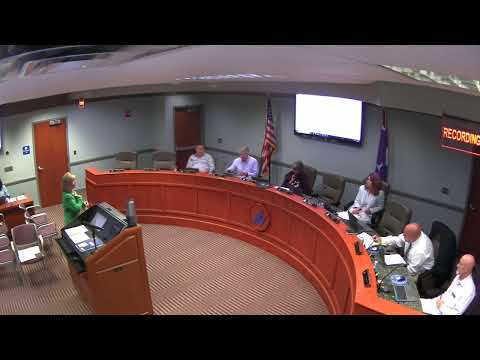
Amy, the staff presenter, summarized the policy history and rationale. She said the district originally adopted a fund balance policy in February 2009 after the 2007–2008 budget shortfalls, and that the policy reflected GFOA best practices: “our board policy says that we have no less than 16%.” She told the committee she was asking trustees to consider changing that threshold to 20%: “I'm just asking if y'all would consider us changing that to 20%.”
Amy framed the change as a precaution to improve the district’s fiscal resilience and to make the district’s position clearer to rating agencies should the district pursue future bond issues. She noted the district is currently holding more than the present minimum: “We're not at that rate right now. We're at 25.”
The presenter reviewed the district’s experience during the 2007–2009 downturn, when the district’s low fund balance forced emergency steps, and reminded trustees that borrowing to cover payroll (tax‑anticipation notes, or TANs) has a real interest cost. She said: “If we ever have to come to you and say that we need a 10, a tax anticipation note, we're just asking to borrow money to make payroll,” and added that when the district previously borrowed to make payroll it cost roughly $50,000 in interest.
Committee members said they were interested but wanted additional analysis. One board member suggested the finance committee could recommend the change to the full board if the committee reached consensus; others said they wanted more time to analyze implications for the budget and for any potential use of fund balance.
Ending: Staff offered to return with written language and cost/benefit analysis if the committee wants to develop a formal recommendation to present to the full board.