Get Full Government Meeting Transcripts, Videos, & Alerts Forever!
Get email alerts on the Board Governance Authority topic
No spam. Unsubscribe anytime.
School board attorney: individual members lack authority to act alone; recommends formal visitation and closed‑session wording
Summary
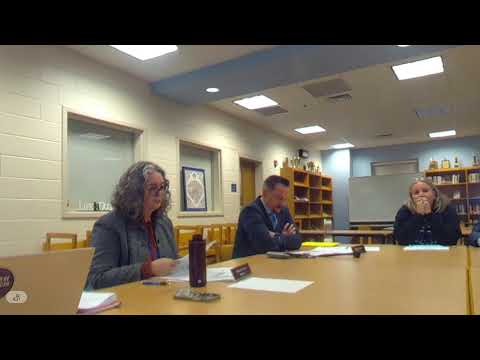
Nikki, an attorney from Sands Anderson representing the New Kent County School Board, told members at a work session that the board is the legal actor and individual members have no independent authority unless the board delegates it; she urged written protocols for visits, information requests and closed‑session motions.
Nikki, an attorney from Sands Anderson representing the New Kent County School board, told members at a work session that the board is the governing legal entity and individual members do not have authority to act on behalf of the board except when the board has formally delegated that authority.
That distinction matters because it affects how members may request information, visit schools, handle constituent complaints and participate in personnel or student‑discipline matters, Nikki said.
“As a board, that is the legal entity. And so at any given time, the will of the board is what three of you want to do. So no individual member has any specific authority unless the rest of the board has given it to you,” Nikki said. “You can only act through duly authorized agents. So for you, that’s your CEO, the superintendent.”
Nikki said most boards establish protocols — for example, authorizing the chair to communicate with the superintendent or to request information — and that adopting clear protocols reduces legal risk. She pointed members to Code of Virginia provisions governing school boards and noted that board policy should be followed to protect the board from inconsistent actions by individual members.
Members repeatedly asked whether they may visit classrooms or respond to constituents directly. Nikki said the statute giving the board authority to “secure by visitation or otherwise as full information as possible about the conduct of the public schools” (Code of Virginia §22.1‑79) vests that power in the board as a whole, not in single members, unless the board delegates it. She recommended members refer visitation requests through board protocols and the superintendent so visits do not interfere with day‑to‑day administration or create due‑process or impartiality problems in student or personnel matters.
“If you gain information from those conversations before it is ripe for a decision in front of you…you might have a due process problem because you have either prejudged the case or you have implicitly expressed a bias or impartiality,” Nikki said, addressing concerns about constituents asking board members to keep complaints confidential. “There is no duty of confidentiality between you and a constituent.”
On closed sessions, Nikki reviewed the statutory requirements for motions under the Virginia Freedom of Information Act, saying a motion must name the purpose of the closed session, the subject matter to be discussed and cite the statutory exemption. “You have to be more specific. You’re going to discuss a legal matter about what? Are you talking about a contract issue? Are you talking about property?” she said. For personnel matters she advised that the motion identify the subject as, for example, the assignment, discipline, resignation or appointment of specific identifiable employees and that the board may specify the number of employees when applicable.
Board members also asked about federal and state law on gender‑identity policy after a recent federal district court ruling vacated the U.S. Department of Education’s 2024 Title IX regulations in one jurisdiction. Nikki said the Kentucky decision only addressed the authority of the Department to adopt that particular rule and does not overturn Fourth Circuit precedent. She also noted the Virginia Human Rights Act remains in force and that the state’s model policies on nondiscrimination remain applicable in Virginia public schools.
Nikki closed by reminding members that superintendent evaluations are an annual duty under contract and board policy; timing is not fixed by the state statute, though many boards choose a date tied to reporting cycles such as October or June. She said board members should review the superintendent’s contract to confirm timing and other evaluation details.
Board members used the session to raise frequent operational questions that the attorney encouraged them to convert into written protocol language — for example, specifying how and when a member may request information, when a request requires board authorization, and how the board will handle visits, volunteer activities or media responses.
The attorney also recommended that the board adopt a matrix or flowchart tying policy statements that use the phrase “the school board shall” to accountable offices or departments, so members and the public understand whether the board acts directly or delegates responsibility to administration.
Ending: The board recessed following the legal briefing and later took up and voted on a separate agenda item to adopt board norms and protocols, with several visitation and violations provisions flagged for further drafting and policy review.