Get Full Government Meeting Transcripts, Videos, & Alerts Forever!
Get email alerts on the Special Districts Finance topic
No spam. Unsubscribe anytime.
Commissioner warns special districts face revenue shortfalls as LAFCO explores efficiency options
Summary
A Kern County commissioner said property‑tax revenues are falling in parts of the county, placing pressure on special districts and prompting LAFCO to consider consolidation and efficiency measures to sustain services.
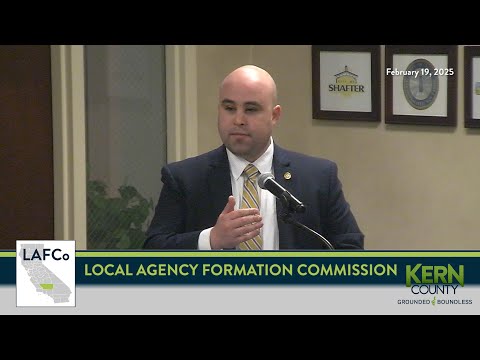
Commissioner Clark used the Feb. 19 Kern County LAFCO meeting to raise concerns about declining property‑tax revenues in parts of Kern County and the resulting fiscal stress on special districts that provide parks, water, sewer, fire and other community services.
Clark said property-tax receipts in some districts have declined more sharply than expected and that reserves are depleted in many districts, particularly recreation and park districts. He described the range of services special districts provide and urged broader community engagement to preserve programs. Clark said parcel-tax increases and other local revenue measures are difficult because they shift cost burdens to taxpayers and businesses already facing economic pressure.
Executive Officer Mr. Knox and other commissioners responded that LAFCO has a role to play in promoting efficiency among local agencies. Knox said the commission can explore structural options — such as consolidations or reorganizations — that might stretch limited revenues further. He indicated he will bring opportunities to the commission for consideration, noting an example discussion about combining West Side RecPark with Buttonwillow and possibly adding Lost Hills, an effort that previously was approved by LAFCO but rejected by voters.
Clark described services at risk — recreation programs, volunteer-dependent activities such as youth sports, and workforce-development programs run by local districts — and said declining grant opportunities are compounding the problem.
The commission did not take a formal vote on consolidation proposals at the meeting. Commissioners exchanged ideas about how to pursue efficiency, and staff said they would return with options and next steps for the commission to consider.