Get Full Government Meeting Transcripts, Videos, & Alerts Forever!
Get email alerts on the Utility Damage Prevention topic
No spam. Unsubscribe anytime.
Ohio 811 warns HB 54 abandonment language could cause disruptions; urges industry coalition process
Summary
Ohio 811 told the Senate Transportation Committee that HB 54 language addressing abandoned utilities could cause community disruption and unexpected costs, and urged a stakeholder coalition to complete recommendations instead of retroactive removal mandates.
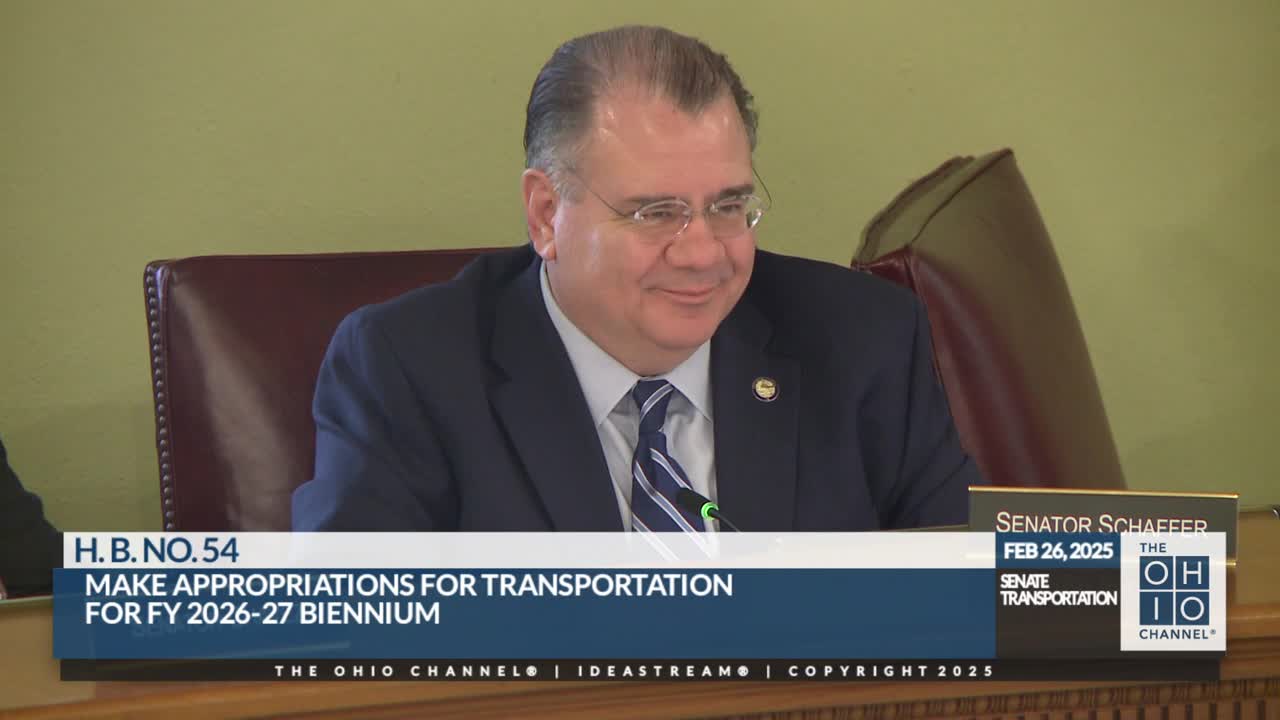
Roger Lipscomb, president and executive director of Ohio 811, told the Senate Transportation Committee on Feb. 26 that provisions in House Bill 54 dealing with abandoned telecommunications and utility structures could be counterproductive and urged the committee to adopt a stakeholder‑developed, day‑forward approach.
Lipscomb said the bill’s current wording — aimed at relieving congestion in crowded rights‑of‑way by removing abandoned facilities — could create significant community disruption and substantially increase costs if implemented retroactively. He said many buried facilities have been placed over more than a century and records for their locations have often been lost: “To seek out and remove these types of facilities would be a near insurmountable task and extremely cost prohibitive.”
Lipscomb described the Ohio Underground Damage Prevention Coalition (OUDPC), a multi‑stakeholder group initiated in 2011, and an abandoned‑line subcommittee formed in late 2023 that is developing practice‑based, forward‑looking solutions. He said those solutions emphasize better day‑forward recordkeeping and construction standards so future abandoned facilities are recorded and do not create the same problems for excavators and communities.
Why it matters: Lipscomb said retroactive removal requirements could delay new installations and impose unfunded costs that would be passed to consumers, and that a misplaced focus on wholesale historical removal risks greater public‑safety impacts than it solves. He urged lawmakers to allow the OUDPC’s stakeholder process to finish recommendations and to craft statutory language that avoids unintended consequences.
Next steps: Lipcomb encouraged stakeholders to participate in the OUDPC’s abandoned‑line subcommittee and asked the committee to consider OUDPC‑developed proposals rather than adopting strict removal mandates in HB 54.
Sources and context: Testimony was delivered as interested‑party testimony during the HB 54 informal hearing; committee members did not take a vote on the provision during the hearing.