Get Full Government Meeting Transcripts, Videos, & Alerts Forever!
Senate Energy Committee adopts substitute for Senate Bill 2 after hours of testimony on utility rate-making, OVEC and siting rules
Summary
The Ohio Senate Energy Committee on Wednesday adopted, without objection, a substitute for Senate Bill 2 and heard hours of testimony on sweeping changes to utility rate making, tax incentives for new generation, the legacy generation rider and siting rules.
The Ohio Senate Energy Committee on Wednesday adopted, without objection, a substitute for Senate Bill 2 and heard hours of testimony from investor‑owned utilities, cooperatives and public‑interest groups about major changes to utility rate making, tax incentives for new generation, the legacy generation rider and changes to the Ohio Power Siting Board process.
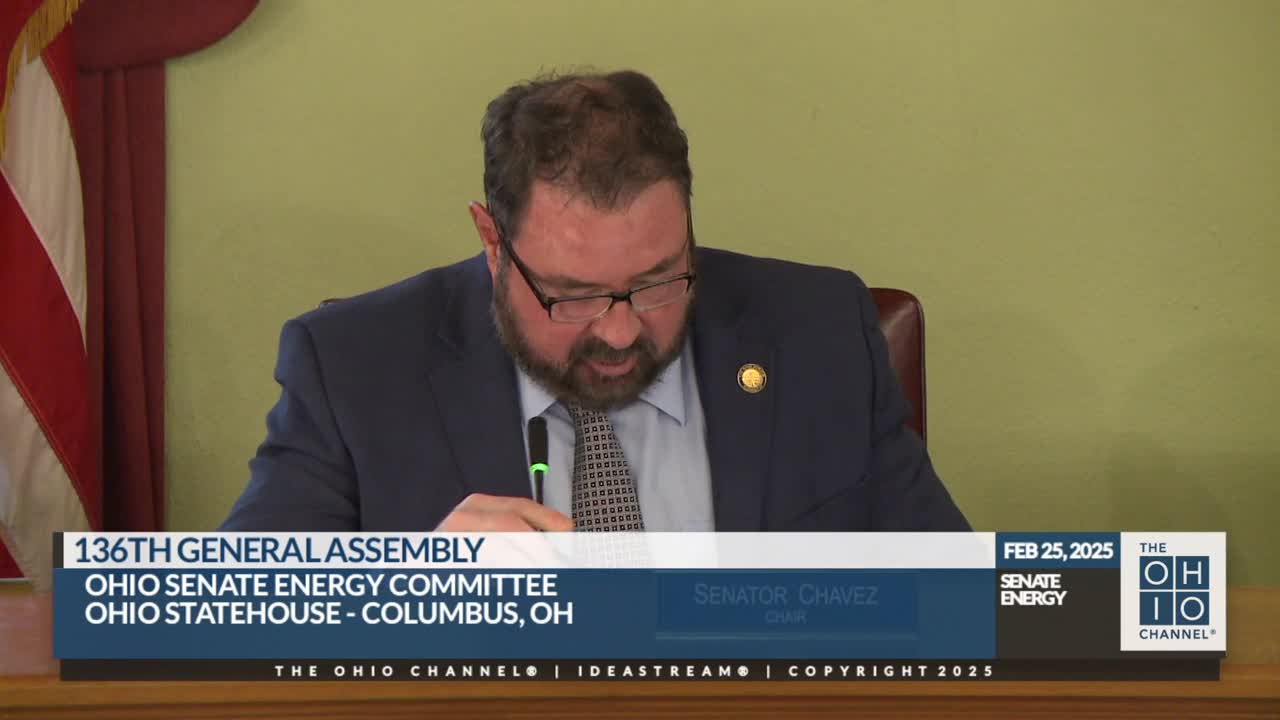
The substitute bill was agreed to by unanimous consent after Senator Steve Reineke (R) moved to adopt substitute bill 0333‑2; committee chair Matt Chavez said the new sub bill "will now be the working document" and directed staff to post it to the committee website and to senate.gov.
The measure — described by proponents as a package of regulatory reforms to modernize how electric distribution utilities recover costs — would remove electric security plan (ESP) provisions, enable some nontraditional billing models and flexible payment schedules, create mini rate‑case procedures and accelerate siting timelines for transmission and distribution projects. The substitute also proposes a 25% tangible personal property (TPP) tax reduction on newly built transmission, distribution and pipeline infrastructure, inserts language clarifying repeal of the legacy generation rider (LGR) in uncodified law, and directs a periodic PUCO rate‑case schedule (PUCO = Public Utilities Commission of Ohio).
Why it matters: witnesses warned the combination of repealing ESPs and the substitute’s retroactive‑refund language could increase regulatory lag, raise financing costs and reduce utilities’ ability to make timely infrastructure investments. Utilities pushed for forward‑looking, multi‑year rate frameworks or carefully structured true‑ups; consumer advocates and environmental groups urged stronger protections for ratepayers and for public input on siting and behind‑the‑meter generation.
Key provisions and debate
- ESP repeal and rate‑making modernization: Several witnesses said ESPs have…
Already have an account? Log in
Subscribe to keep reading
Unlock the rest of this article — and every article on Citizen Portal.
- Unlimited articles
- AI-powered breakdowns of topics, speakers, decisions, and budgets
- Instant alerts when your location has a new meeting
- Follow topics and more locations
- 1,000 AI Insights / month, plus AI Chat