Get Full Government Meeting Transcripts, Videos, & Alerts Forever!
Get email alerts on the Consumer Protections Billing topic
No spam. Unsubscribe anytime.
Consumer groups warn consumer‑choice billing and forecasted rates could harm households without stronger protections
Summary
The Ohio Consumers' Counsel and other consumer advocates said SB2’s consumer choice billing program and forecasted test years could raise prices or expose customers to risky marketing; they urged bans on door‑to‑door marketing, tighter supplier standards, and refund/reconciliation rules.
Consumer advocates told the Senate committee that several SB2 provisions intended to modernize retail billing and supplier interaction need stronger consumer protections before enactment.
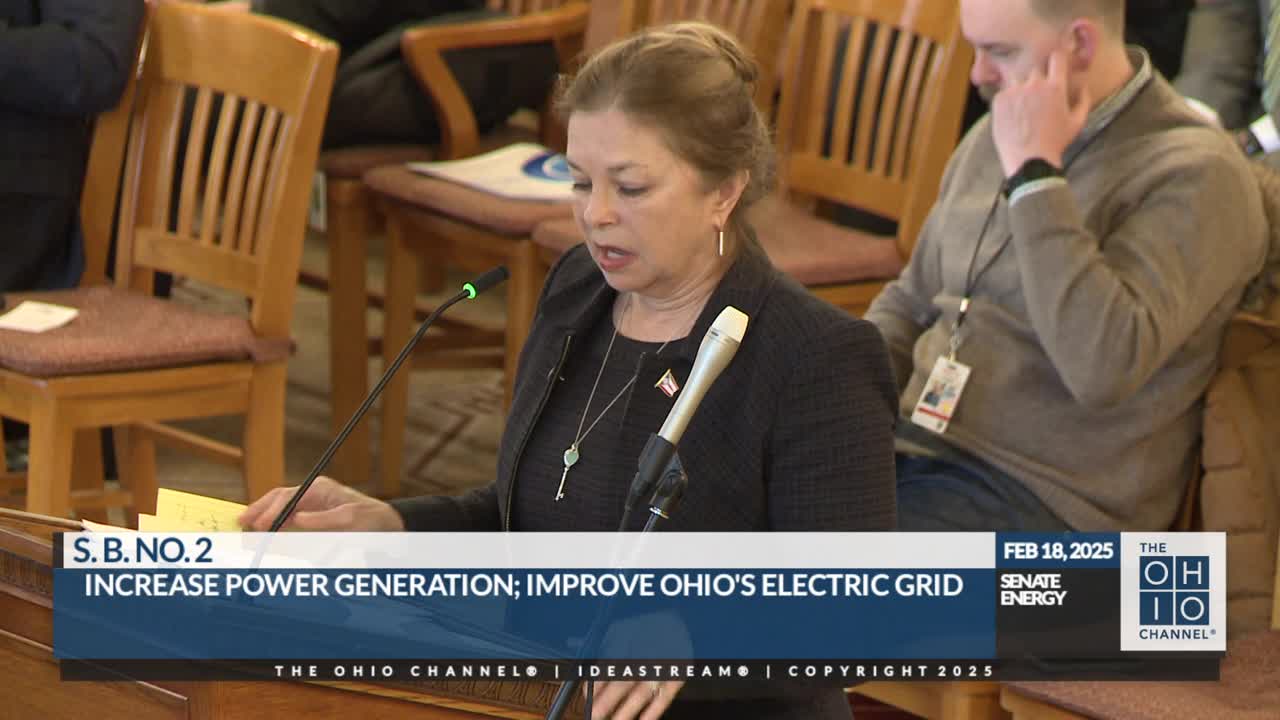
Maureen Willis, director of the Ohio Consumers’ Counsel, testified as an interested party and said the new Consumer Choice Billing Program — which would allow non‑utility third parties and energy marketers to bill and collect on behalf of suppliers — risks higher costs for non‑shopping customers and would expand marketers’ access to consumers. Willis recommended removing the provision; if retained, she asked the committee to require marketers to pay their own billing costs rather than shifting them to non‑shopping customers, ban door‑to‑door marketing, and strengthen notice requirements for teaser fixed rates that later become variable.
Vistra Corp.’s Arnie Quinn and other supplier witnesses supported customer choice billing as a means to innovate supply offerings and cited programs they run in other states (for example, nights‑and‑weekends products and targeted energy‑aid funds). Quinn said rather than banning marketing methods, the state should raise supplier bonding and registration standards to keep fly‑by‑night operators out of the market.
Consumer witnesses also warned that the bill’s faster PUCO shot clock and allowance of fully forecasted test years could enable interim rate implementations before a meaningful reconciliation — a scenario that would expose consumers to non‑final rates without adequate refund mechanisms.
Witnesses asked the committee to: (1) ensure a symmetrical reconciliation/true‑up so differences between forecasted initial rates and final rates produce refunds or charges as appropriate; (2) require higher bonding and registration standards for competitive suppliers; (3) strengthen notice and disclosure requirements for customers moved from fixed to variable contracts; and (4) prohibit or tightly regulate door‑to‑door marketing if consumer harms are not otherwise addressed.