Get Full Government Meeting Transcripts, Videos, & Alerts Forever!
Get email alerts on the Rate Making Reform topic
No spam. Unsubscribe anytime.
Committee hears contested changes to rate-making: shot clock, forecasted test year and mini rate cases draw concern
Summary
Witnesses debated SB2 provisions that would impose a 275‑day decision deadline for PUCO rate orders, allow forecasted test years, eliminate the date‑certain asset valuation and create 'mini' rate cases for economic development — with consumer advocates warning of risks and industry urging faster decisions.
Senate Bill 2 would overhaul Ohio rate‑making practice, and witnesses at the committee hearing offered competing views on how far to go.
The bill sets a 275‑day deadline for the Public Utilities Commission of Ohio to issue rate orders — a change multiple proponents called necessary to reduce Ohio’s regulatory lag. Supporters including the Ohio Business Roundtable and Ohio Manufacturers Association said long delays (they cited an average of roughly 17 months) inflate costs; Alexandra Dunne of the Ohio Business Roundtable said faster decisions would help attract generation investment.
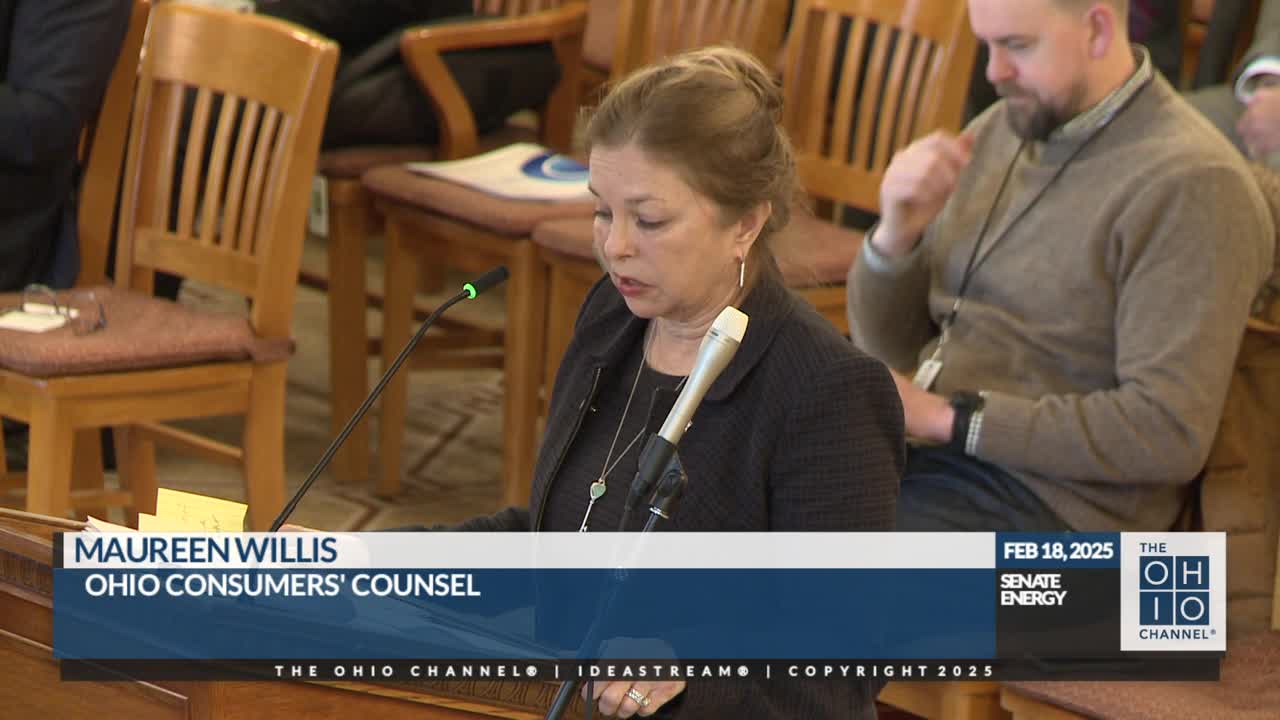
Consumer advocates applauded the shot clock but warned against the bill’s current automatic‑approval consequence. Maureen Willis of the Ohio Consumers’ Counsel urged that the law should not allow interim rates to go into effect after 275 days without preserving the current right to refunds when final orders diverge from interim charges.
A second contested element is the bill’s allowance of fully forecasted test periods for initial rates and use of a 13‑month rolling average for valuation. David Proano and consumer witnesses said forecasted test years can disadvantage ratepayers because initial rates would rely on projected utility expenses and could be set before test‑period data are complete; they urged safeguards in the true‑up mechanism to ensure refunds or reconciliations when forecasts differ from actuals.
SB2 would also remove “date‑certain” valuation in favor of a rolling valuation and create a mini rate case process to recover certain economic‑development capital expenditures outside of a full rate case. Industry witnesses (Ohio Energy Group and manufacturers) supported the mini‑case idea as a way to preserve programs that incentivize interruptible load and economic development — programs that large industrial users say helped during Winter Storm Elliott. Consumer and environmental witnesses urged either strict dollar limits or elimination of the mini rate case to avoid creating a new rider‑style mechanism that bypasses comprehensive review.
Finally, witnesses urged the committee to clarify discovery deadlines that would otherwise end 215 days after application, and to ensure that any accelerated schedule does not unduly curtail parties’ ability to obtain evidence in complex proceedings.
No formal action was taken at the hearing; witnesses asked the committee to adopt targeted amendments ensuring (1) a shot clock without automatic, non‑refundable interim rates, (2) a robust true‑up and reconciliation if forecasted test years are used, and (3) narrow, capped authority for any mini rate cases.