Get Full Government Meeting Transcripts, Videos, & Alerts Forever!
Get email alerts on the Educational Savings Accounts topic
No spam. Unsubscribe anytime.
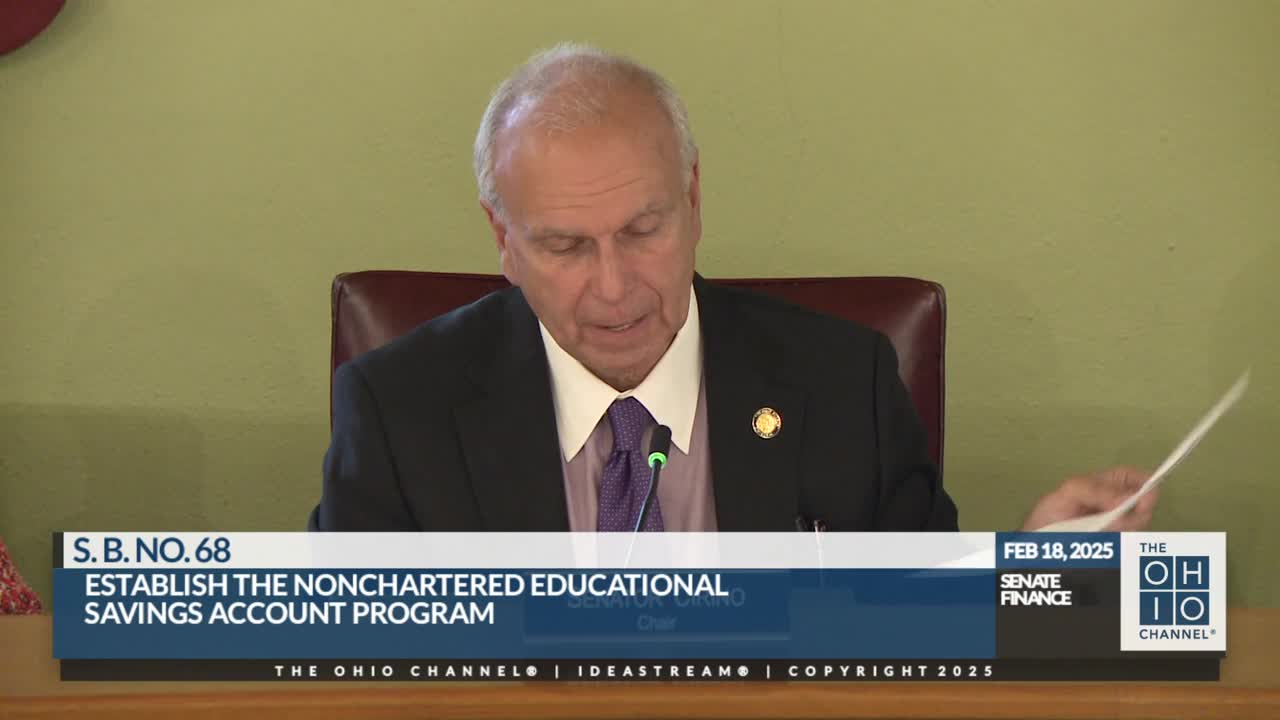
Senate hearing on bill to extend educational savings accounts to non‑chartered private schools
Summary
The Senate Finance Committee held a first hearing on Senate Bill 68, which would authorize an educational savings account (ESA) program for students enrolled in non‑chartered, nonpublic tuition‑based schools.
The Senate Finance Committee held a first hearing on Senate Bill 68, which would authorize an educational savings account (ESA) program for students enrolled in non‑chartered, nonpublic tuition‑based schools.
Sponsor Senator Jay Romanchuk told the committee SB 68 would extend state assistance to families attending non‑chartered private schools left out of recent EdChoice expansions. “The non‑chartered educational savings account program will require the treasurer of state to administer the program with the assistance of the Department of Education and Workforce,” Romanchuk said, adding oversight would include audits and reporting requirements.
Fiscal estimate provided by the sponsor: Romanchuk said an earlier draft attached a $51,000,000 figure intended to cover about 7,000 to 7,500 students at roughly 51 schools. He said the per‑pupil payment in the bill is set at 90% of the statewide average pupil expense (approximately $7,400 per student in the sponsor’s estimate) rather than 100% to reduce fiscal cost.
Account mechanics and compliance: The bill would allow parents to direct funds to a non‑chartered school for eligible education goods and services or to be reimbursed for documented expenses. Parents must affirm that students will take a nationally recognized standardized achievement test, per sponsor testimony. Romanchuk said the bill contains a complaint and adjudication process administered by the Department of Education and Workforce if misuse or compliance issues arise.
Committee members asked how the $51 million figure was calculated and how misuse would be prevented. Romanchuk said the amount was based on 90% of average pupil expense applied to the sponsor’s estimate of eligible students; he described a complaint system and adjudication process for enforcement.
Senator Mark Lang asked for a list of the approximately 51 schools; Romanchuk said the list was an estimate and that many non‑chartered schools previously operated with limited state reporting so counts are approximate; he agreed to provide a list to committee members.
The committee did not take a vote; the hearing ended after sponsor testimony and member questions.