Get Full Government Meeting Transcripts, Videos, & Alerts Forever!
Get email alerts on the Education Vouchers topic
No spam. Unsubscribe anytime.
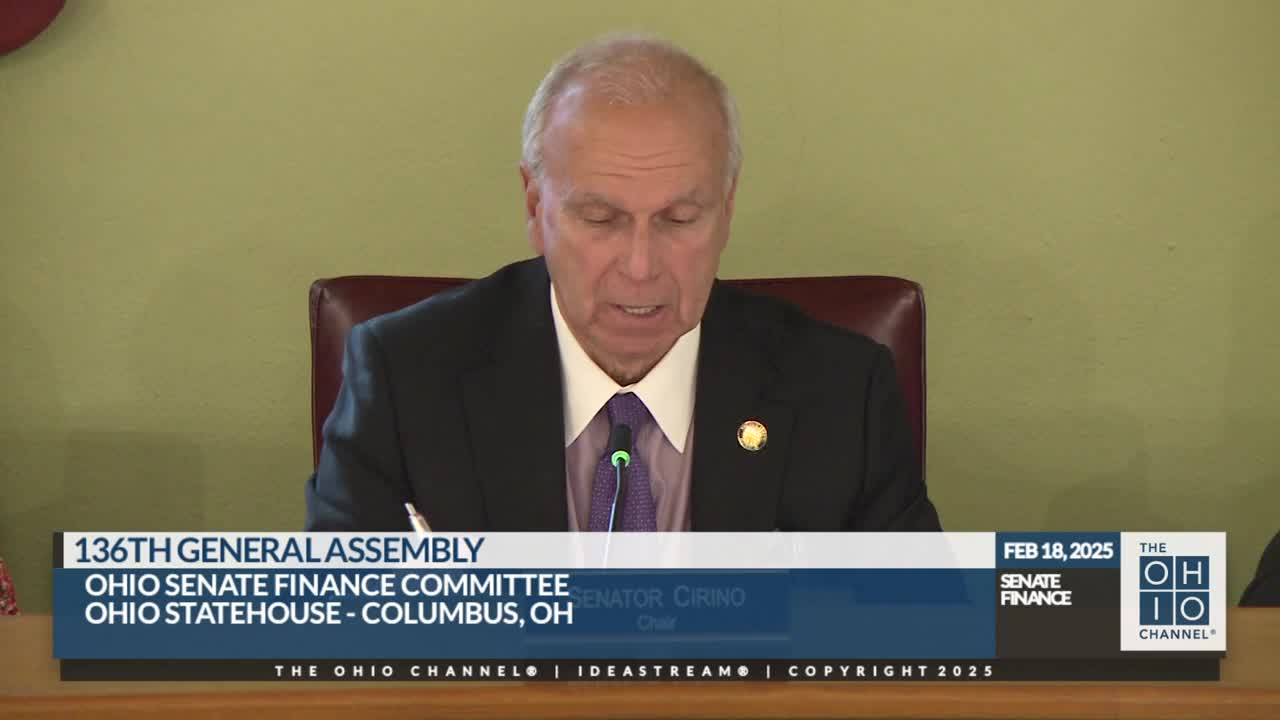
Senate hears bill to let special‑needs scholarship recipients also use EdChoice or Cleveland vouchers
Summary
Senate Bill 44 would permit students eligible for autism or John Peterson special needs scholarships to receive an EdChoice or Cleveland scholarship concurrently; sponsor said the change addresses affordability barriers for private school attendance, while senators asked about caps and the number of eligible providers.
The Senate Finance Committee heard sponsor testimony on Senate Bill 44, which would allow students who qualify for an autism scholarship or a John Peterson special needs scholarship to also receive an EdChoice or Cleveland scholarship at the same time.
Sponsor Senator Sandra O’Brien said the bill corrects an existing limitation that prevents students from stacking special‑needs scholarships with general school‑choice vouchers. “This bill would allow those students to also receive an Ed Choice or Cleveland scholarship on top of their autism or John Peterson scholarship,” O’Brien told the committee.
How it works: Under current law, students qualifying for an autism or John Peterson scholarship may receive only that scholarship. SB 44 would permit concurrent receipt, with the John Peterson scholarship restricted to paying for services if the student also receives an EdChoice scholarship, per sponsor testimony.
Why it matters: O’Brien said many private schools offer services and tuition that scholarships alone do not fully cover; allowing concurrent scholarships, she said, would enable families to afford private schools that provide needed services.
Committee questions focused on caps, provider counts and parental choice. Senator Vernon Ingram asked whether there would be a cap on the total amount a student could receive; O’Brien said there is not a cap in the bill and noted that Legislative Service Commission estimates used in analysis may be on the high side. Ingram followed by asking whether parents would be responsible for any tuition shortfall if the voucher and service scholarship do not cover full private tuition; O’Brien said yes, parents would remain responsible for any balance, similar to current scholarship practice.
Senator Brenner sought clarification on allocation rules; O’Brien said the bill is designed so that operating‑cost funds (EdChoice/Cleveland) cover tuition and the special‑needs scholarships cover services, not “double dipping.” Senator Paula Hicks Hudson asked whether the committee has a count of providers that would be eligible under both programs; O’Brien said no reliable statewide count is currently available and that many private schools do not have programs to serve the full autism spectrum, making it difficult to estimate impacts.
The committee did not take a vote; the hearing concluded after sponsor testimony and member questions.