Get Full Government Meeting Transcripts, Videos, & Alerts Forever!
Get email alerts on the Childcare topic
No spam. Unsubscribe anytime.
Senate committee hears sponsor testimony for bill proposing employer‑assisted child care credit
Summary
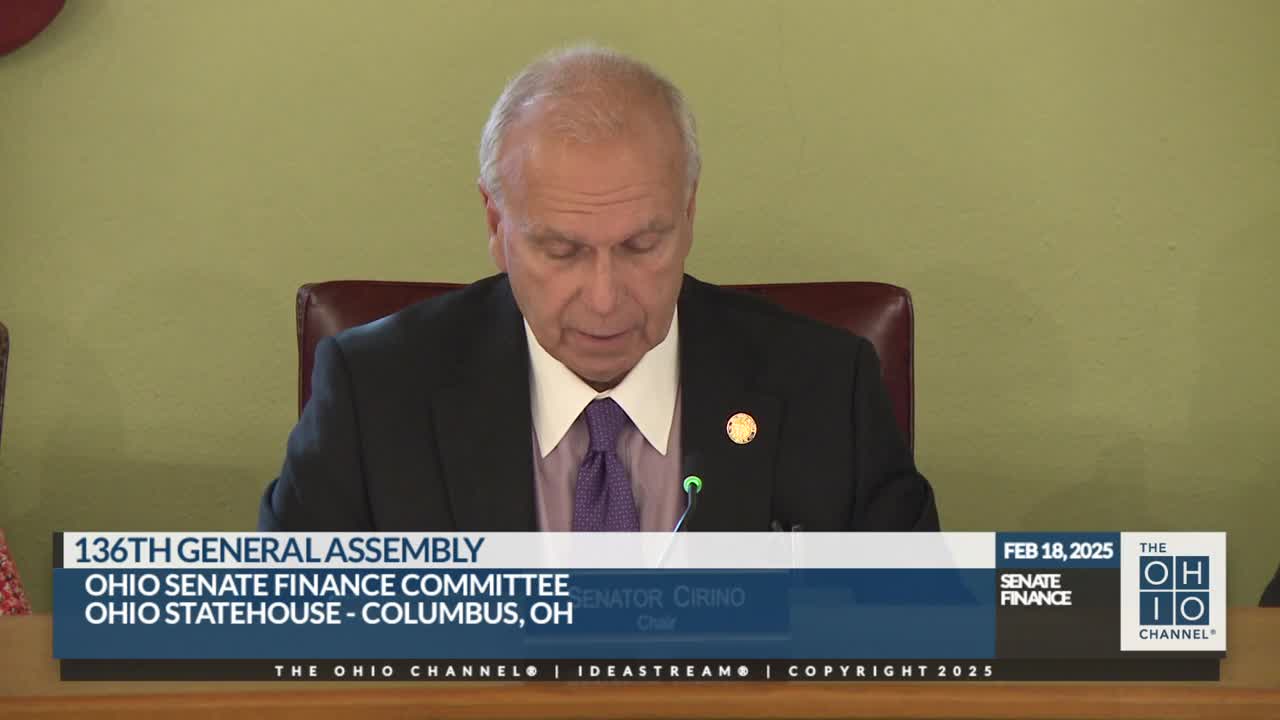
The Senate Finance Committee on Friday held the first hearing on Senate Bill 32, the Child Care Credit Act, a proposal to create a cost‑sharing program that would split childcare costs among employees, employers and the state and would be seeded with a $10,000,000 appropriation.
The Senate Finance Committee on Friday held the first hearing on Senate Bill 32, the Child Care Credit Act, a proposal to create a cost‑sharing program that would split childcare costs among employees, employers and the state and would be seeded with a $10,000,000 appropriation.
The bill’s sponsor, Senator Theresa Reynolds, told the committee the program is designed “to tackle Ohio’s childcare crisis head on,” arguing high childcare costs force many parents — particularly working mothers — to reduce hours or leave the workforce. Reynolds said eligible families would be chosen by their employers and that families already receiving publicly funded childcare would be ineligible.
Reynolds and her joint sponsor described the plan as a voluntary tool for employers to attract and retain staff and said the appropriation would be distributed on a first‑come, first‑served basis to licensed or certified childcare providers. “This act will permit the cost of child care to be shared equally, with each contributing up to 1/3 share,” Reynolds said.
Why it matters: Committee members and sponsors framed SB 32 as an economic‑development and workforce measure as well as a child‑welfare policy. Sponsors said reducing childcare costs should increase parental workforce participation and stabilize providers who face low reimbursement rates.
Committee members asked for details the bill does not specify. Senator Vernon Ingram asked whether eligibility should be raised from 130% to 200% of the federal poverty level; Reynolds said SB 32 targets families who do not already qualify for public programs and that changing income eligibility would likely require a separate amendment. Ingram also asked whether program administrators had demographic data from similar programs in other states; Reynolds said she had not obtained that information but would follow up and pointed to proponents (including Goodwill, she said) who may have that data.
Members pressed on program mechanics. Ingram asked how provider fees such as late‑pickup charges would be handled and whether the “one‑third” guidance would carry a statutory maximum. Reynolds said the Department of Children and Youth would administer the program and that administrative rules would define qualifying costs; she described the “one‑third” phrasing as a guideline that an employer could exceed.
There was general support among committee members for the concept. Senator Steve Blessing described the bill as “a step in the right direction” toward broader childcare support. The committee did not take a vote; the hearing closed after questions and sponsor responses.
The bill as presented includes: a $10,000,000 appropriation, employer selection of participating employees, exclusion of families already receiving publicly funded childcare, and distribution to licensed or certified providers on a first‑come, first‑served basis. Program administration and definitions of qualifying costs would be set in rules by the Department of Children and Youth, per sponsor testimony.
What’s next: Sponsors and proponents indicated they will provide additional data and details for committee members; no committee action was taken at the hearing.