Get Full Government Meeting Transcripts, Videos, & Alerts Forever!
Get email alerts on the Bomb Squad Arrest Authority topic
No spam. Unsubscribe anytime.
Committee declines bill to give fire-department bomb techs limited arrest authority
Summary
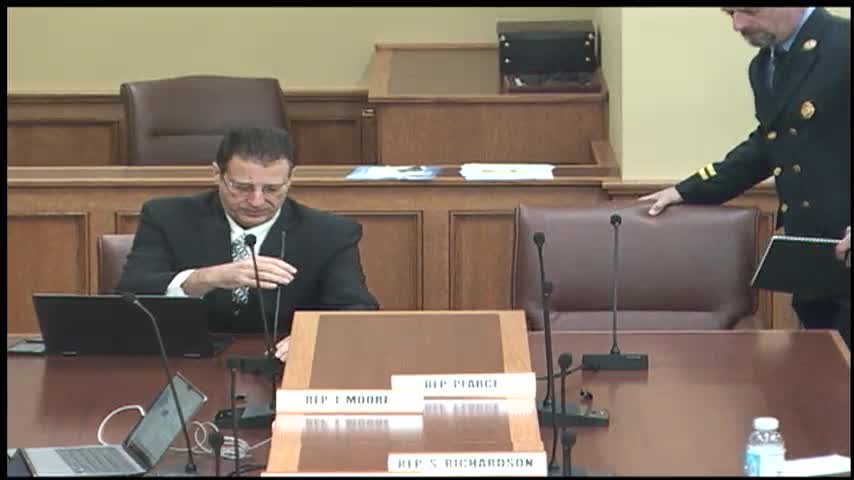
Representative Steven Meeks’ bill to authorize fire-department bomb technicians to make arrests in narrow, explosives-related or assisting-law-enforcement circumstances failed to pass after prolonged testimony from bomb-squad members, local commanders and committee members concerned about extending law-enforcement power to fire personnel.
Representative Steven Meeks (District 42) presented House Bill 1648 to give certain bomb-squad members the authority to make arrests in very limited circumstances tied to explosives incidents or when assisting law enforcement at request. Meeks and multiple witnesses told the committee the measure would resolve jurisdictional and training issues for fire-based bomb technicians who currently lack arrest authority despite specialized training and federal clearances. The committee discussed training requirements, interagency arrangements and liability; the bill failed to pass.
Meeks said the bill is “part b” of earlier legislation and would allow bomb-squad members, when acting in their official capacity and after completing a part-time law-enforcement training course approved by the Arkansas Commission on Law Enforcement Standards and Training (C-LEST/“CLEST” in testimony), to make arrests related to explosive incidents or while assisting a law-enforcement agency. He and witnesses emphasized the group’s small size — witnesses said there are 21 fire-department bomb technicians in the state — and their specialized FBI hazardous-device-school training. Captain Brenton Grama of the Conway Fire Department’s bomb squad and retired Conway commander Todd Carden described situations where bomb technicians arrived before deputies and could not detain a suspect without arrest authority.
Committee members raised separation-of-functions concerns and asked whether firefighters should take full law-enforcement academy training to obtain arrest powers. Representative Richardson and Representative Tash asked why some bomb squads are fire-based and others law-enforcement–based; witnesses said local history and sheriff or municipal choices drove different models and that the FBI regulates squad numbers and clearance requirements. Witnesses and the sponsor said the bill aimed to create a narrowly tailored option for the handful of trained technicians who would opt into the authority and complete the required part-time training rather than forcing a full academy course on fire departments.
Representative Shepherd asked if the authority was optional and whether a failure to act might create liability; Meeks and witnesses said the statute would be limited and largely optional — trained technicians would act only in specified circumstances and generally would cede to law enforcement when officers were present. Representative Moore asked whether existing law precludes a fire department member from being a part-time deputy; witnesses said deputization was possible but created a jurisdictional and logistical burden (paying overtime to send staff through full academy courses) and shifted liability to sheriff’s offices.
Representative Tash and others expressed discomfort with extending arrest authority outside traditional law-enforcement channels and said such authority should require full academy training. After discussion, the committee took a voice vote and the chair announced the noes had it; the bill did not pass out of committee.
Supporters argued the bill resolves a practical gap: bomb technicians are often the specialized responders to explosive materials and may arrive before or without law enforcement, and they need authority and qualified-immunity protections to secure a suspect until officers arrive. Opponents said preserving a high bar for law-enforcement authority was important and warned about mission creep. The sponsor closed by urging members to support the trained technicians; the motion to pass failed.