Get Full Government Meeting Transcripts, Videos, & Alerts Forever!
Get email alerts on the Medical Solicitation topic
No spam. Unsubscribe anytime.
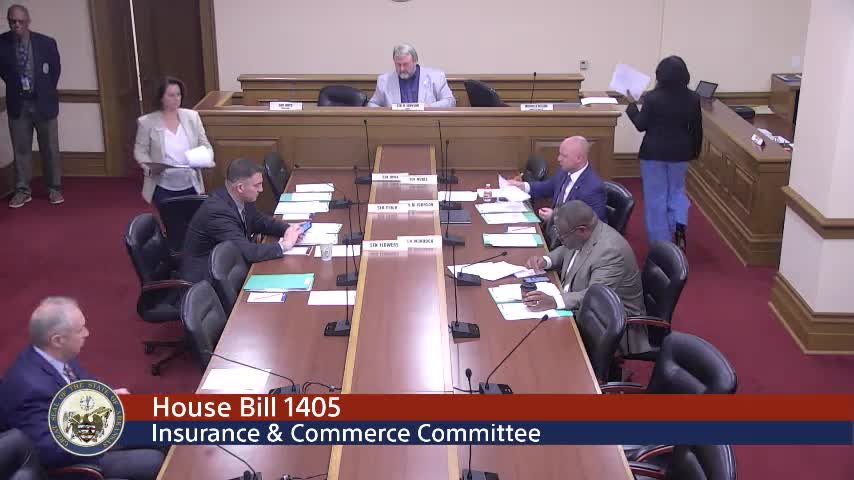
Senate adopts 14‑day ban on direct solicitation of collision victims by chiropractors after heated testimony
Summary
The Senate Insurance & Commerce Committee approved a bill banning direct contact by chiropractors or their solicitors with crash victims for 14 days after an accident.
The Senate Insurance & Commerce Committee passed legislation restricting direct outreach by chiropractors and chiropractic solicitors to people involved in collisions for 14 days after the incident.
Sen. Justin Boyd and attorney William Buckley presented the bill; Buckley said the measure "prohibits direct contact by chiropractors or chiropractic runners during the 14 days immediately following a collision or other type of catastrophe." He described repeated unsolicited contacts that, he said, sometimes include misleading claims that a particular provider is the insurer's doctor.
Multiple witnesses spoke against the bill. Chiropractor Chris Cathy said the profession voluntarily tightened rules over the past decade and said complaints fell from about 50 a year before 2013 to a handful since 2019; he warned the bill unfairly singles out chiropractors and asked that any restriction cover all healthcare providers. Dr. Michael Courtney of the Arkansas Chiropractic Society said the measure risks constitutional questions because it applies only to chiropractic physicians and not other medical providers. Attorney Kevin O'Dwyer and lobbyist Don Tilton also urged caution, arguing the current enforcement and board processes reduce the problem and that a profession‑specific statute raises equal‑protection concerns. Don Tilton urged study of the boardand targeted remedies rather than a sweeping statutory restriction.
Supporters said fraudulent or aggressive solicitations persist in some local markets and that injured people are especially vulnerable immediately after a crash. The bill's sponsor noted the Arkansas Supreme Court previously ruled against an earlier version of a similar statute because it lacked a defined time period and an identified class; the sponsor said the current bill addresses both issues by creating a 14‑day cooling period aimed at collision victims.
The committee passed the bill by voice vote. The transcript records robust questioning and multiple pro and con witnesses; a roll‑call tally was not recorded in the hearing record.